
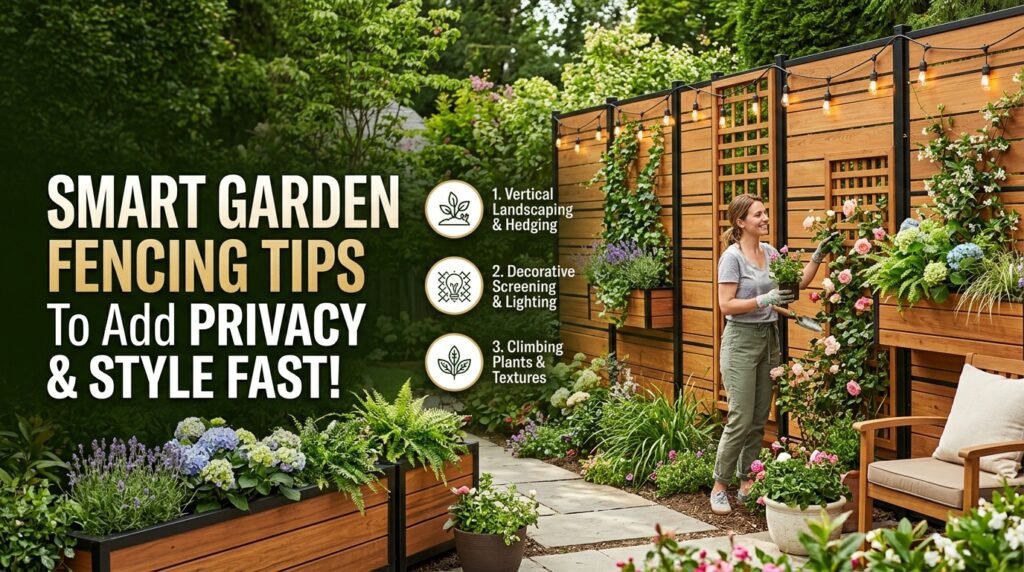
Smart garden fencing Tips to Add Privacy and Style Fast can change how your outdoor space feels in a single weekend. You get calmer mornings, fewer awkward neighbour views, and a garden that looks finished.
With Smart garden fence Tips to Add Privacy and Style Fast, you don’t need a huge budget. You just need the right plan, the right garden fence materials, and a style that suits your home.
This guide on Smart garden fencing Tips to Add Privacy and Style Fast keeps things simple. You’ll learn garden fence ideas, smart measuring, and what lasts in UK rain or US sun.
Why Garden Fencing Matters for Privacy, Style, and Value
A good garden fence does more than mark a line. It changes how you use your space. If you’ve ever avoided your patio because you felt watched, garden fence privacy fixes that fast. You start sitting outside again, even on normal days. Style matters too, because the fence becomes your backdrop. When you choose the right garden fence design, your plants look greener, your furniture looks sharper, and your whole garden feels more cared for.
If you want garden fence to improve kerb appeal, think like a buyer for a minute. A straight, clean fence signals that the home has been looked after. In the UK, that can lift a tired terrace garden. In the US, it can make a front lawn look crisp and intentional. The best wins happen when garden fencing that matches landscaping ties into what you already have, like brick, stone, deck boards, or even your window trims.
Before you buy anything, pause for garden fencing planning tips. Decide what you want most: quiet, privacy, pet safety, or a modern look. Then match the fence to that goal. It’s like picking shoes. Running trainers look great, but not at a wedding.
Know the Rules First: what height garden fencing is allowed
Rules vary, so you’ll always want to check local guidance. Still, there’s a helpful pattern. Most places treat front boundaries differently from back ones, because front gardens affect street visibility. That’s why garden fence height becomes a big deal for garden fencing for front garden projects. In the UK, councils often care about sight lines near roads. In the US, HOAs and city codes can limit heights and styles.
This matters for boundary fencing for gardens too. When a fence sits on or near a shared line, small mistakes turn into big arguments. A simple habit helps: agree the boundary first, then plan the fence run. If you’re unsure, mark your line and corners before you set garden fence posts. That tiny step saves a lot of headaches later.
A practical tip for both UK and US homes is to plan privacy in layers. Use a sensible garden fence height where it’s allowed, then add planting for extra cover. It looks softer, and it avoids the boxed-in feeling.
Garden Fencing Types: Pick the Best Style for Your Space
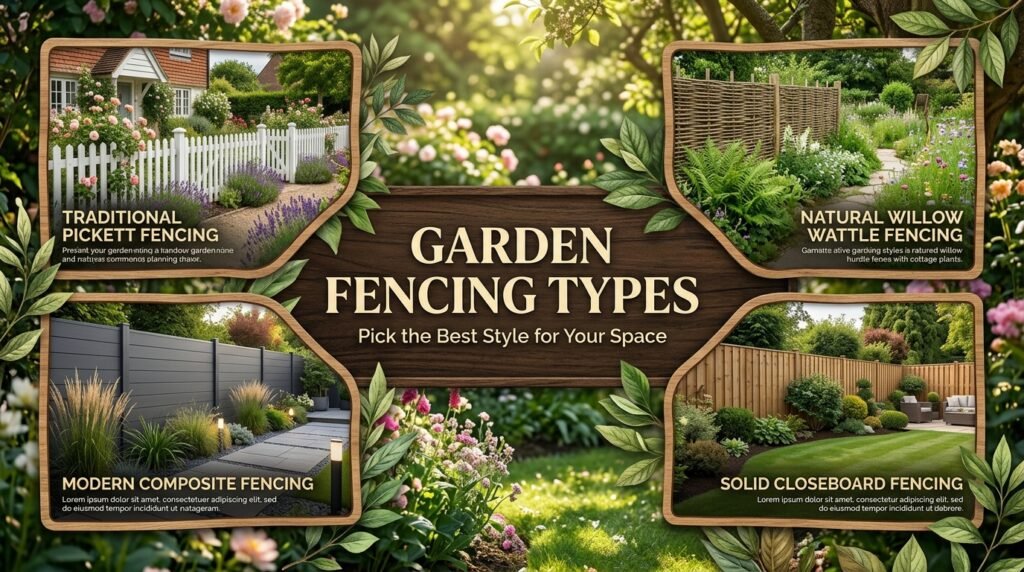
The quickest route to a tidy garden is choosing the right garden fence styles. Start with the feel you want. If you want something friendly and classic, a picket garden fence suits paths and front gardens. It frames flowers nicely, and it looks welcoming. If you need quick coverage, a panel garden fence gives instant privacy and a clean edge. For many homes, standard garden fence panels also keep costs predictable.
If you like a sleek look, go for a slatted garden fence. It’s one of the best options for modern garden fencing because it feels light, not heavy. With the right spacing, it can help with garden fencing for windy areas too, since air passes through instead of pushing against a solid wall. Want something that feels airy and green? A lattice garden fence works brilliantly for garden fencing with climbing plants. It turns blank fence space into a living feature, which is perfect for small patios.
If your space is tight, the trick is to think smarter, not bigger. Fencing for small gardens works best when you keep lines straight and details minimal. A busy fence can make a small garden feel cluttered. A simple garden fence design with one strong colour and a neat top line often looks bigger than it really is.
Garden Fence Materials: Pros and Cons of Wood, Metal, and Vinyl
Choosing garden fence materials is where most people either save money or waste it. Wooden garden fencing feels warm and natural, and you can customise it easily. It also suits older homes in the UK and classic suburban gardens in the US. If you pick treated timber, pressure treated garden fencing benefits include better resistance to rot and insects. Still, wood needs care. If you ignore garden fence maintenance, wood can warp, split, or fade.
If you want strength and security, metal garden fencing is hard to beat. It works well for front boundaries, slopes, and homes where security matters. Many people choose it for garden fence security because it’s tough to damage quickly. It also looks sharp with modern landscaping, especially when paired with stone, gravel, or neat hedges.
If you want low effort, vinyl garden fencing can be a stress-free choice. It’s often low maintenance garden fencing, and it handles wet weather well, which helps if you need weather resistant garden fencing. It can cost more upfront than basic wood, but it often saves time over the years. For a premium balance, composite garden fencing gives a clean, modern finish and usually lasts well with minimal upkeep. Many homeowners pick it for garden fencing that lasts longer, especially in harsh sun or heavy rain.
Here’s a simple comparison to help you choose fast:
| Option | Best for | Typical upkeep | Look and feel | Longevity notes |
| wooden garden fencing | Warm style, easy custom design | Medium | Natural, traditional | Needs sealing, watch for rot |
| metal garden fencing | Strength and visible security | Low | Crisp, modern or classic | Very durable, can rust if neglected |
| vinyl garden fencing | Easy cleaning, steady appearance | Very low | Clean, uniform | Great in wet climates, can fade in strong sun |
| composite garden fencing | Premium look, long lifespan | Very low | Modern, smooth | Strong choice for long-term value |
This table also lines up with garden fencing pros and cons by material. Pick the one that fits your lifestyle, not just your taste.
Best Garden Fencing ideas for Fast Privacy and Style
If you want results quickly, start with the parts people notice first. A straight top line and tidy edges can make even cheap garden fencing look smart. Paint also changes everything. With the right finish, you can refresh old panels without replacing the whole fence. This is where best paint or stain for garden fencing matters. Stain keeps the grain visible and looks natural. Paint gives a bold, modern block of colour that makes plants pop.
Try these styling upgrades as short “do-this-now” moves, without turning the article into a long checklist. Keep panels consistent, fix wonky rails, and replace only the damaged sections. That approach supports garden fence repair and delays garden fence replacement. It also saves money, which matters when you’re watching garden fence cost.
You can also use colour to change how the space feels. Darker tones can push boundaries back visually, while lighter tones brighten shade. That’s why garden fencing colour ideas can act like visual magic. Add greenery, and it looks even better. A fence covered in jasmine, ivy, or climbing roses becomes part of the garden, not just a boundary. That’s the sweet spot for garden fencing with climbing plants.
If sustainability matters to you, look at eco friendly garden fencing options. FSC timber, recycled composite boards, and repairing what you already own can reduce waste. Sometimes the greenest decision is simply making your current fence last longer.
Garden Fencing for Privacy and Security: What Works Best
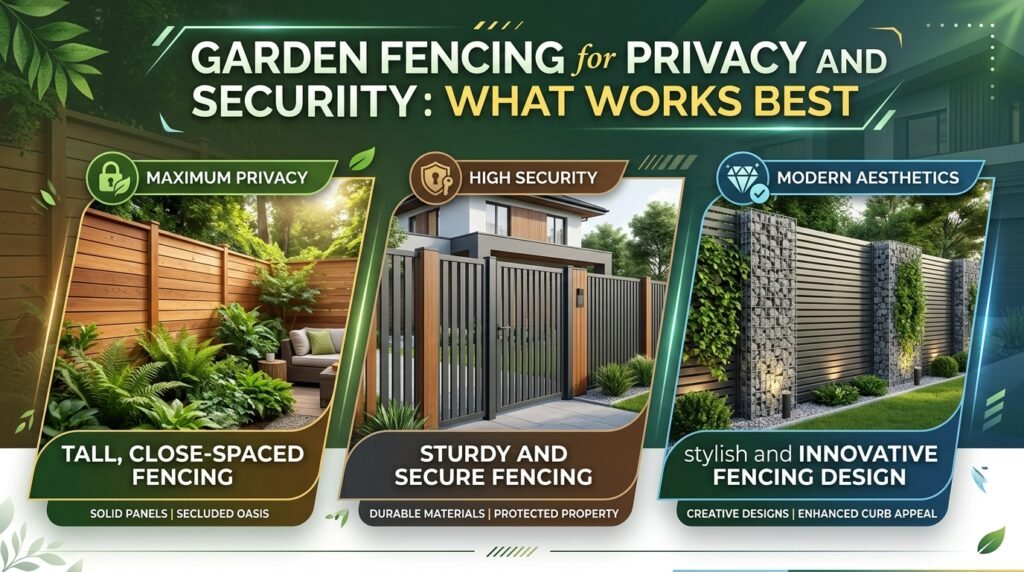
If privacy is your main goal, focus on structure first. Solid panels, well-fitted slats, and tight joins give the strongest garden fence privacy. Many people searching for best garden fencing for privacy get the best result from full-height panels or composite boards, because they block sight lines quickly. Add plants in front, and you get extra cover plus a softer look.
Security works the same way. Start with strength, then add smart extras. Thick posts, strong fixings, and a sensible height improve garden fence security without making your garden look harsh. If you want garden fencing to stop intruders, consider motion lighting, visible boundaries, and thorny planting in key areas. It’s not about fear. It’s about making your home a less tempting target.
Pets change the plan too. For garden fencing for pets and dogs, gaps matter more than height alone. Small dogs squeeze through tiny spaces, and bigger dogs can push weak panels. A sturdy base, secure corners, and a well-fitted garden fence gate with a reliable latch make a real difference. If your garden is exposed, think about garden fencing for windy areas. Semi-solid designs, like slats with spacing, often handle wind better than fully solid fences.
Garden Fencing Cost: What You’ll Pay and What Drives It
Garden fence cost isn’t just about panels. It’s also about labour, post depth, corners, gates, and ground conditions. A simple straight run costs less than a fence with multiple turns and a wide gate opening. Materials matter too. Garden fence panels tend to keep prices steady, while custom slats or composite boards can lift the total.
A useful way to budget is to split costs into three buckets. First, materials like panels, posts, fixings, and finishes. Second, groundwork like digging, concrete, and disposal. Third, extras like a quality garden fence gate, post caps, and staining. If you need garden fencing options on a budget, stage the project. Do the back garden first, then the front later. You still get privacy, and you spread the spend.
Longevity changes the maths. Garden fencing lifespan by type can make an expensive fence cheaper in the long run. A fence that lasts fifteen years with low upkeep can beat a cheaper fence that needs replacing after five.
Garden Fencing Installation Tips: How to Plan, Measure, and Fit It Right
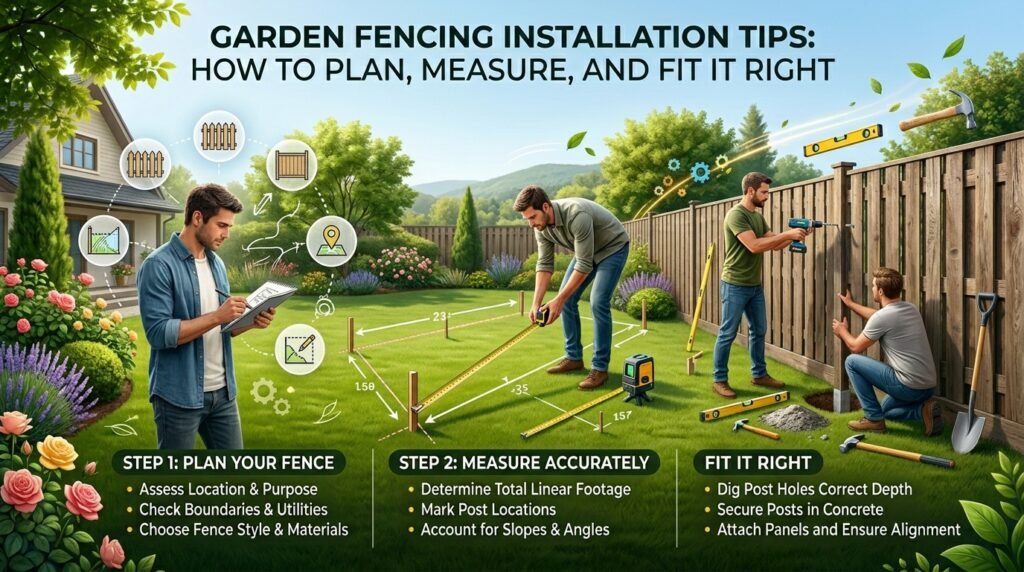
You don’t need to be a builder to do this well. You just need a clear plan and patience. Start with how to choose garden fencing for your goal. If privacy matters most, pick solid panels or composite boards. If wind is a problem, use slats with spacing. If you want charm, use pickets or decorative sections. That’s the logic behind easiest garden fencing to install too, because standard panels and straight runs are simpler than complex custom builds.
Next comes accuracy. How to measure for garden fencing means measuring fence runs, corners, and any slope changes. Add in your gate width, and double-check the swing space. Then think about strength. How deep to set fence posts depends on your soil and exposure, but deeper posts usually mean fewer future repairs. Strong garden fence posts stop leaning, rattling, and sagging gates.
When you’re ready to build, garden fence installation is all about straight lines and solid posts. Use a string line, keep levels tight, and fix panels evenly. If you’re using panels, learn how to fit garden fence panels properly by securing them at consistent heights and keeping a small clearance from the ground to reduce rot risk. That clearance also helps with how to keep garden fencing from rotting, especially in wet UK winters or damp US regions.
If your ground slopes, don’t panic. Garden fencing for uneven ground works best with either stepping panels in levels or racking panels to follow the slope. Pick one method and stick to it, or the fence will look messy. Finally, remember garden fencing mistakes to avoid. Posts set too shallow, ignoring drainage, mixing cheap fixings with heavy panels, and rushing the gate installation are the usual culprits.
Keeping It Looking New: Maintenance, Repair, and Replacement
A fence only looks “new” if you keep it clean and protected. With wood, sealing or staining on a sensible schedule reduces cracking and water damage. With vinyl and composite, gentle washing keeps it fresh. For metal, check paint and touch up chips before rust spreads. That’s simple garden fence maintenance, and it pays off quickly.
If something breaks, choose the right fix. Sometimes a single panel swap solves the problem. That’s straightforward garden fence repair. If posts wobble or rot, though, you may need garden fence replacement in that section. Don’t feel bad about replacing parts. A fence is like a jacket. You can patch a tear, but if the zip is broken and the lining is gone, you replace it.
FAQs
How can I make my garden feel more private quickly?
Smart garden fencing Tips to Add Privacy and Style Fast work best with garden fence panels and planting for extra screening.
What’s a simple way to improve the look of an old fence?
Use Smart garden fencing Tips to Add Privacy and Style Fast with garden fencing colour ideas and fresh fixings for a clean finish.
How do I protect a wooden fence from damage?
Smart garden fencing Tips to Add Privacy and Style Fast include how to keep garden fencing from rotting by lifting panels off soil.
What’s the easiest fence option for a weekend project?
Smart garden fencing Tips to Add Privacy and Style Fast often start with easiest garden fencing to install using standard panels.
How do I keep my dog safe in the garden?
Smart garden fencing Tips to Add Privacy and Style Fast help with garden fencing for pets and dogs by closing gaps and securing gates.
What should I do if my garden is very windy?
Smart garden fencing Tips to Add Privacy and Style Fast recommend garden fencing for windy areas with slats that let air pass through.
When should I repair instead of replacing a fence?
Smart garden fencing Tips to Add Privacy and Style Fast suggest garden fence repair when posts stay solid and only panels look worn.
Conclusion
Smart garden fencing Tips to Add Privacy and Style Fast give you quick wins that feel big. You get comfort, privacy, and a cleaner look.
With Smart garden fencing Tips to Add Privacy and Style Fast, you choose the right style first. Then you match the best material to your weather. Smart garden fencing Tips to Add Privacy and Style Fast also help you build smarter. Measure well, set posts deep, and finish neatly.
Learn how to get rid of fruit flies in kitchen with simple home fixes, smart traps, and cleaning tips that stop them fast and keep them away.