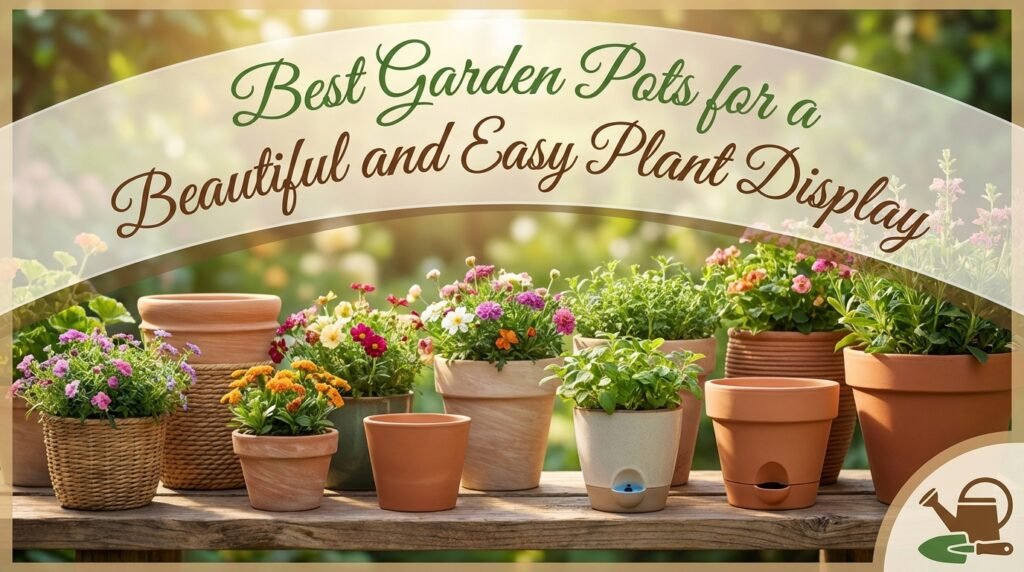
Garden pots make plant care simple and fun. You can move them easily, try a new arrangement in minutes, and style almost any space with them. Even a small corner looks fresh with the right choice.
Many people struggle to pick the right pot. Some choose the wrong size, and others ignore drainage, which is why plants fail even with good care. The right container, matched to the plant and the spot, solves most of those problems at once.
You can use pots indoors or outdoors. From balconies to patios, they fit anywhere, and with smart choices your plants grow better and your space looks great.
Introduction to Garden Pots and Why They Matter
When you grow in pots, you gain control. You decide where your plants live, and you can manage sunlight, water, and space far more easily than in open ground.
Think about two identical plants. One sits in a dull container, the other in a decorative pot. The second one instantly looks more premium — that is the power of styling.
A pair of outdoor pots by the door creates a welcoming entrance, while indoor pots bring calm and freshness to a room. Even basic containers can transform a space when placed smartly.
Types of Garden Pots for Every Space and Style
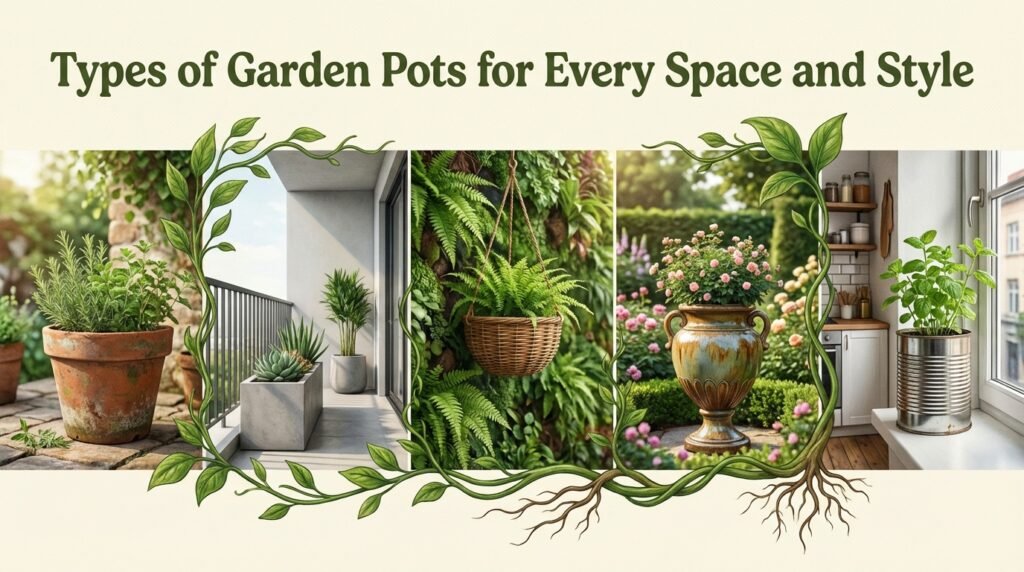
Different spaces need different pots, and you cannot use the same design everywhere. Understanding the main types helps you match the pot to the place.
Outdoor spaces work best with Outdoor flower pots and Outdoor pots. These are made to handle rain and sun. They are usually weather-resistant garden pot, which makes them perfect for patios.
Indoor areas need lighter options. Pots made for indoor plants focus more on design, and they often come in sleek shapes and clean finishes.
For tight areas, compact pots are ideal. Hanging planters or stackable designs work well — a small balcony can look full and green with a few well-placed pots on the rail and the floor.
If you want structure, a plant box or a long planter works well. These are great for herbs and vegetables, and they keep everything neat and organised.
How to Choose the Right Garden Pots for Your Plants
Choosing the right pot feels confusing at first, but once you understand the basics — size, drainage, and material — it becomes easy. If you are setting up a new bed as well, our guide on how to start a garden walks through the whole process from a bare patch to the first harvest.
Start with size. The right one depends on the plant: a small herb needs only a little space, while a growing plant needs room for its roots to spread.
Drainage matters a lot. Without proper holes, water stays trapped and leads to root rot, so always check the drainage holes before you plant. And if one low corner of your yard collects water instead of draining, a rain garden puts that runoff to work.
If you are new, look for beginner-friendly pots — light, forgiving, and easy to move. Also think about how you will use them: the best choice is the one that matches your space and how much care you can give.
Best Materials for Garden Pots and Their Benefits
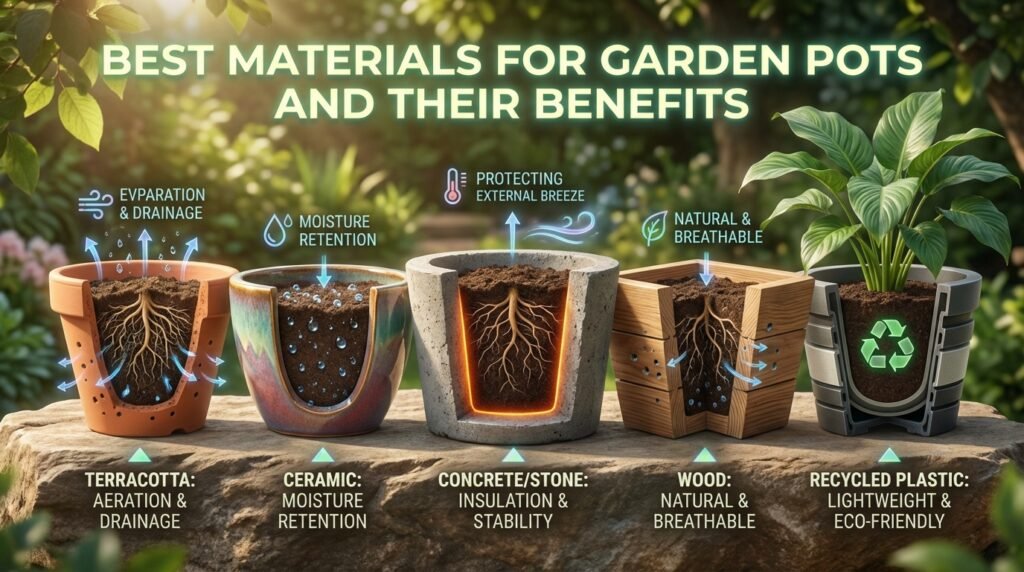
Material changes everything. It affects weight, durability, and plant health.
| Material | Key Benefit | Best Use |
| ceramic garden pots | Stylish and heavy | Indoor décor |
| plastic garden pots | Lightweight and cheap | Easy movement |
| terracotta pots | Breathable and natural | Healthy roots |
| eco-friendly garden pots | Sustainable choice | Green living |
Ceramic garden pots look elegant. They fit modern homes perfectly. However, they can be heavy.
Plastic pots are practical and affordable. You can move them easily, which helps when the sunlight changes through the seasons.
Terracotta pots are a classic choice. They allow air to pass through. This keeps roots healthy.
If you care about sustainability, choose eco-friendly options made from recycled or natural materials. They reduce waste and still perform well.
Best Garden Pots for Plants and Flowers
Not all plants need the same pot. That is where smart selection comes in.
For greenery, the pot should support growth. Larger roots need a large container, while small herbs work fine in a compact pot.
Flowering plants need attention too. The pot should highlight colour — bright blooms look better in neutral containers that let the flowers do the talking.
If durability matters, go for a sturdy pot. It lasts longer and saves money in the long run. Which one is best depends on your plant type, the space you have, and how much care you can give.
Creative Garden Pots Ideas to Style Your Outdoor Space
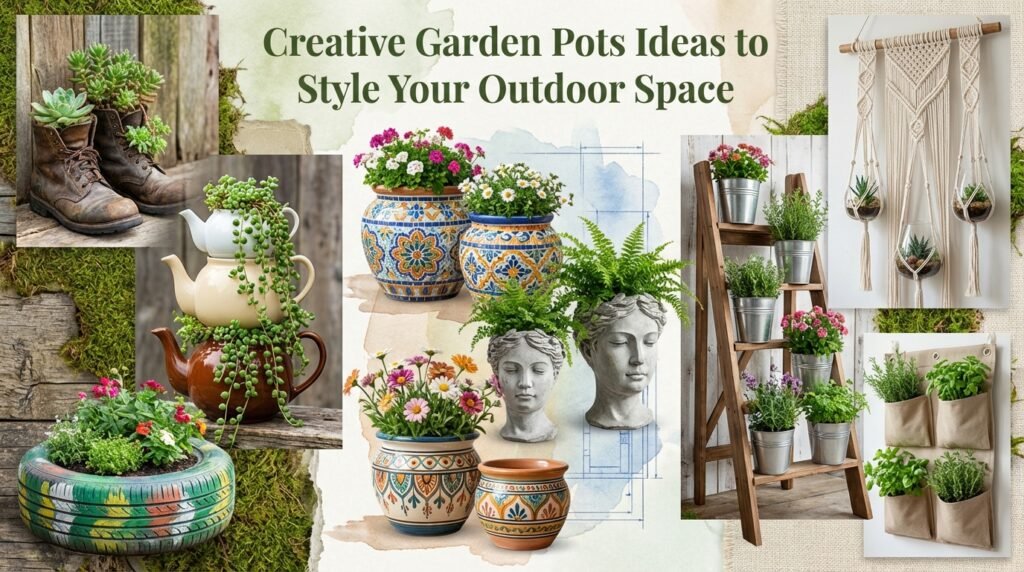
Styling is where things get fun. You can turn a simple area into a beautiful corner with the right ideas.
Try mixing heights and colours: place tall pots at the back and smaller ones in front to create depth. A few well-chosen pieces from our round-up of the best garden accessories finish the arrangement without cluttering it.
If you enjoy DIY, repaint old pots or use wooden crates as planters — a little paint and imagination go a long way.
You can also decorate pots with patterns, stones, or textures to add personality.
Modern homes favour clean shapes and neutral colours, which create a calm and stylish look.
Garden Pots Design Trends and Styling Tips
Design has a strong impact on how your space looks and feels. A well-planned arrangement can make even a small area look premium.
Start by mixing styles. Combine modern pots with natural textures like wood and stone to create balance.
Then think about placement. Place larger pots in corners, use medium ones to fill gaps, and let small pots add detail.
For patios, group pots in odd numbers for a natural feel, and add contrast using colour and height.
Common Mistakes to Avoid When Using Garden Pots
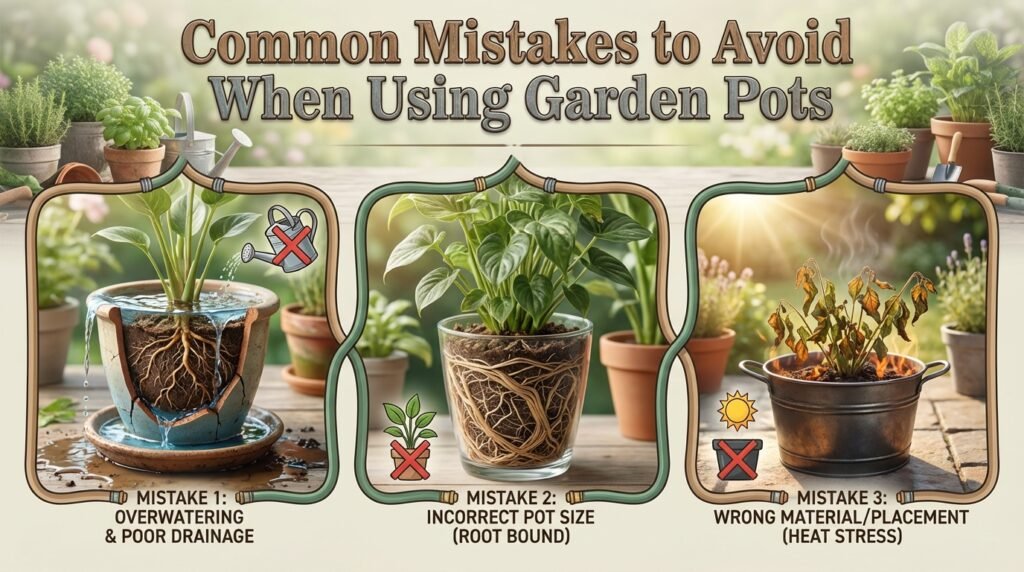
Many people make simple mistakes. These can damage plants quickly.
One common issue is wrong size. Small pots restrict growth. Another mistake is ignoring drainage. This causes water build-up.
Some people buy cheap pots without checking quality — these often crack or fade fast. Placement matters too: putting a pot in the wrong spot can stress the plant.
Avoid these mistakes, and your plants will thrive.
Easy Tips to Maintain and Care for Garden Pots
Maintenance keeps your setup looking fresh. It also protects your plants.
Clean your pots regularly. Dirt and salts build up over time, and a quick wash keeps them safe for the plants.
Next, check for cracks and wear, and replace damaged pots early before they fail.
Outdoor pots need extra care — they should handle rain, sun, and wind, and during extreme seasons you should move them or protect them. Our guide on how to winterize your garden explains the cold-weather steps in detail.
Garden Pots for Special Uses
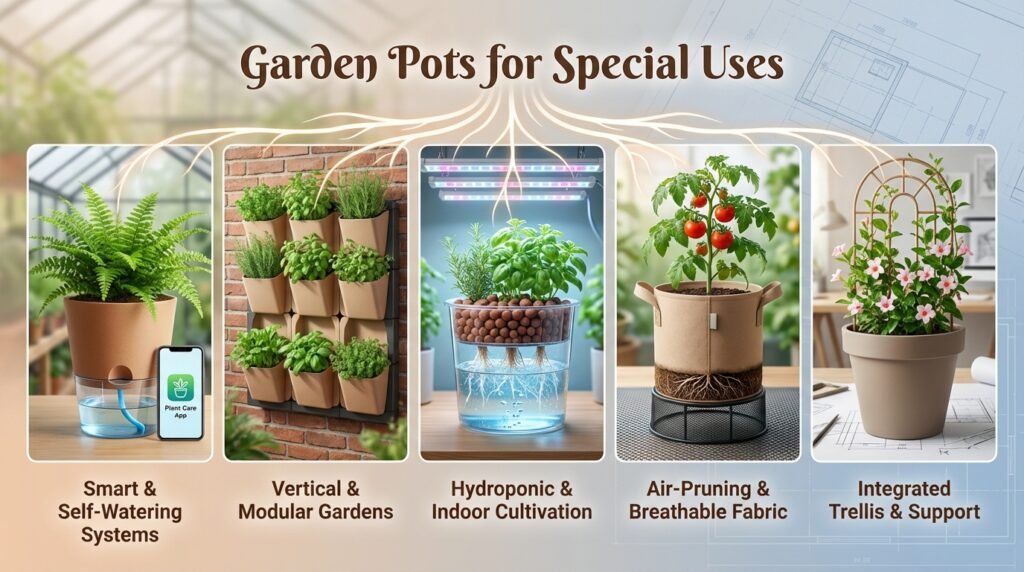
Different uses need different pots. If you grow herbs, use small containers — they are easy to manage and fit on a windowsill or balcony rail.
Indoor setups rely on compact, stylish pots that fit the room.
For gardens, outdoor pots must be strong enough to handle rain, sun, and wind.
Where to Buy the Best Garden Pots Online and Offline
Buying the right pot matters as much as choosing it. Online shops give you a wider range of designs and sizes to choose from.
Local shops help you check quality. You can feel the material and weight.
Look for balance: find affordable options that still offer durability, so you get value without compromise.
FAQs
How do I pick the right size for my plants?
Match the pot to the plant’s roots: a small herb is happy in a 6-inch pot, while a tomato or shrub needs at least 12 to 14 inches across so the roots have room to spread. If the plant is rootbound — roots circling the bottom — go one size up, about 2 inches wider. A pot that is too large holds wet soil and can rot the roots, so bigger is not always better.
Which material works best for beginners?
Plastic is the easiest starting point. It is light, cheap, and holds moisture well, so watering mistakes are more forgiving. Once you are confident, terracotta is a good next step — it breathes, which keeps roots healthy, though it dries out faster and needs more frequent watering.
Can I use the same pot indoors and outdoors?
Yes, if the pot suits both settings. It needs drainage holes and a material that handles weather — glazed ceramic, fibreglass, or sturdy plastic work in both. Terracotta can crack in a hard frost, so bring those pots inside or into a shed for winter.
How often should pots be cleaned?
Give pots a good clean every few months, and always before replanting. Scrub out old soil and salt deposits with warm water and a stiff brush, and rinse well. Clean pots stop disease spreading from one plant to the next.
Are expensive pots always better?
Not always. A well-made pot at a fair price often performs just as well as a designer one — what matters is drainage, thickness, and whether the material suits your climate. Spend more on pots that stay outside year-round, and save on lightweight indoor ones.
What is the best setup for small spaces?
Go vertical: wall planters, hanging baskets, and stacked pots use the walls instead of the floor. A single railing planter can hold a row of herbs, and a tall narrow pot in a corner adds height without taking floor space. Group pots in odd numbers so the arrangement looks natural.
Do plants grow better in larger pots?
Plants grow better in the right-sized pot, not just a bigger one. A pot that matches the root ball gives balanced growth and lets the soil dry evenly between waterings. Move up one size at a time — about 2 inches wider — when the roots fill the current pot.
Conclusion
Garden pots make plant care easy and enjoyable. You can style any space with the right choices, and from balconies to patios they fit everywhere.
When you pick the right size and material, plants grow better. Smart placement improves both health and style, and the right pots also reduce maintenance and effort. Start simple, build slowly, and try different styles and layouts.
Turn your space into a bird haven with garden birds UK tips. Learn how to attract, feed, and identify birds visiting your garden year-round.