

A kitchen can feel tired after a few years. Cabinets lose their shine. Colours fade. Many people think the only solution is to replace them. That is expensive and messy. Learning how to paint kitchen cabinets can change everything without a full renovation.
When you understand how to paint kitchen cabinets, you can give your kitchen a fresh personality. A simple coat of paint can create a modern space in just a few days. Many homeowners now choose kitchen cabinet painting instead of buying new units. It saves money and delivers impressive results.
The good news is that how to paint kitchen cabinets is not difficult when you follow the right steps. With the proper tools and careful preparation, your cabinets can look brand new. This guide explains the complete process of how to paint kitchen cabinets, from preparation to achieving a professional finish.
Tools and Materials You Need for How to Paint Kitchen Cabinets
Before starting how to paint kitchen cabinets, gathering the right tools makes the job easier and smoother. Professional painters often say that preparation determines the final result. Using the correct materials ensures a durable and beautiful finish.
The most important item is the best paint for kitchen cabinets. Cabinet paint must resist moisture, heat, and daily use. Many modern paints are specially designed for kitchen cabinet painting and create a strong surface that lasts for years.
Preparation tools also play a key role. Before starting any diy kitchen cabinet painting, the surface must be perfectly clean. This is why degreasing kitchen cabinets and clean cabinet surfaces is the first task. Grease from cooking can stop paint from sticking properly.
Hardware also needs attention. Professional painters recommend cabinet hardware removal before painting. When you remove cabinet doors, painting becomes much easier and more precise. It also prevents paint from damaging hinges and handles.
Painting tools matter too. Painters usually use cabinet paint brush for edges and corners. Larger surfaces require painters to use paint roller for cabinets. This combination helps achieve a smooth paint finish and prevents uneven coverage.
Proper preparation also protects the room. Always focus on protecting kitchen surfaces such as countertops, floors, and appliances. A simple covering can prevent stains and make cleaning easier after the project.
Kitchen Cabinet Paint Preparation for Best Results
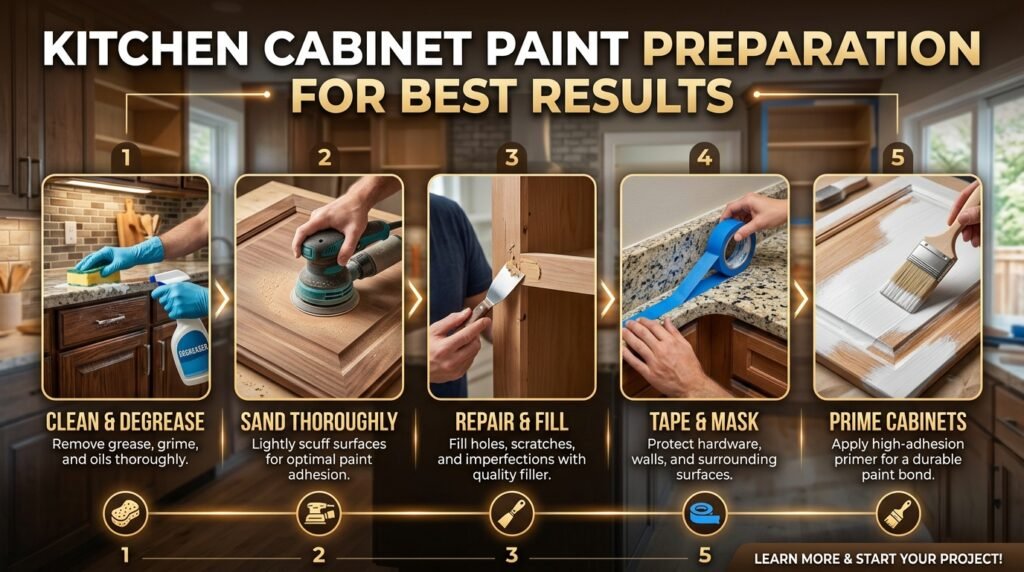
Preparation is the secret behind every successful kitchen cabinet makeover. Skipping this step leads to peeling paint and poor durability. Many beginners rush the process, but professionals treat preparation as the most important stage.
The first task involves cleaning. Proper degreasing kitchen cabinets removes cooking oils and dirt. Even small grease spots can cause paint to bubble or peel later. Once cleaned, you must focus on sanding before painting.
During this stage, painters start sanding cabinet doors and frames carefully. Sanding removes the old glossy finish and helps the new paint grip the surface. This step is especially important when painting wooden kitchen cabinets.
The preparation stage also includes a complete kitchen cabinet paint preparation process. Many professionals follow strict cabinet paint preparation steps to guarantee strong adhesion and durability.
A simple preparation workflow looks like this:
| Preparation Stage | Purpose |
| Cleaning surfaces | Remove grease and dust |
| Sanding | Improve paint adhesion |
| Removing hardware | Allow smoother painting |
| Protecting surfaces | Prevent paint damage |
Proper preparation also helps when painting laminate cabinets. Laminate surfaces are smooth, so sanding and priming become even more important.
This stage may take time. However, good preparation ensures your kitchen cabinet restoration lasts for many years.
Step-by-Step Guide on How to Paint Kitchen Cabinets Smoothly
Once preparation is complete, the real transformation begins. This step-by-step cabinet painting tutorial explains the safest and most reliable way to complete the project.
The first stage is priming. Painters always apply primer coat before the final paint layer. Primer improves adhesion and supports cabinet paint durability. It also hides old colours and stains.
Next comes painting. Begin with painting cabinet frames inside the kitchen. Frames often contain corners and edges that require patience. Using small brushes during painting cabinet doors evenly helps prevent uneven coverage.
After the first coat dries, painters apply second coat of paint. This step creates a stronger colour and improves the overall appearance. Always respect the drying time between coats to avoid smudges and marks.
Achieving a perfect finish requires good technique. Professionals pay close attention to brush strokes prevention and avoid roller marks on cabinets. These small details separate average results from a true professional cabinet finish.
The cabinet paint drying process is equally important. Paint may feel dry within hours, yet full curing can take days. Patience during this stage helps create a long-lasting cabinet paint finish.
When the paint fully dries, you can reinstall cabinet handles and mount the doors again. The final result is often dramatic. Many homeowners enjoy stunning cabinet painting before and after transformations.
Best Cabinet Painting Techniques for Different Cabinet Types
Not all cabinets are the same. Different materials require different cabinet painting techniques.
Wood cabinets are the easiest to paint. When painting wooden kitchen cabinets, sanding and priming allow paint to bond naturally with the surface. This makes kitchen cabinet refinishing a reliable option for older kitchens.
Laminate cabinets need special attention. Smooth surfaces require strong primer during painting laminate cabinets. Without proper priming, paint may peel.
Colour choice also affects the final look. Many homeowners search for fresh kitchen cabinet colour ideas that match modern design trends. Popular modern kitchen cabinet paint colours include soft white, navy blue, sage green, and charcoal grey.
These colours help homeowners update kitchen cabinets with paint while keeping a stylish and timeless appearance.
Common Mistakes to Avoid When Learning How to Paint Kitchen Cabinets
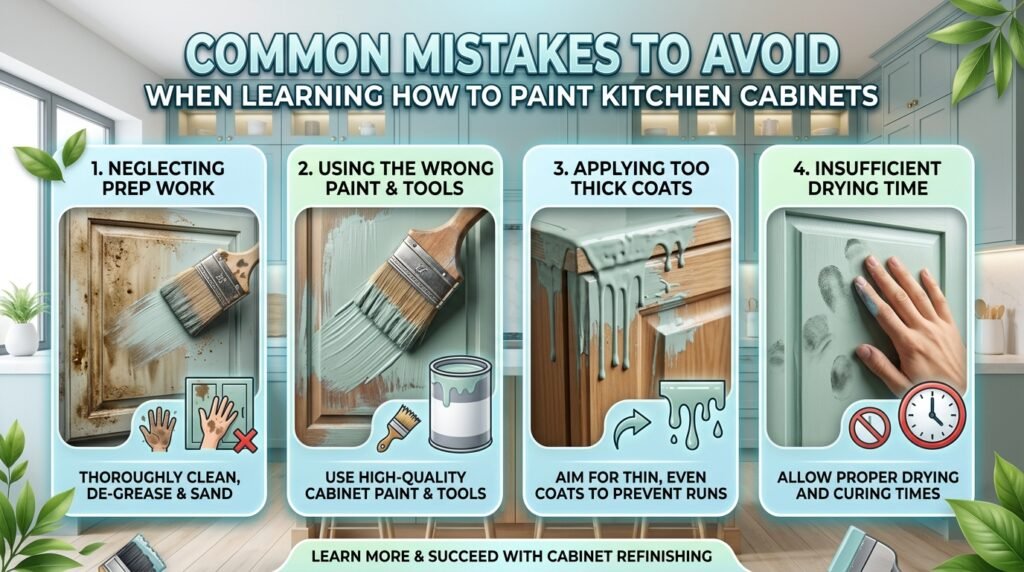
Many DIY painters start enthusiastically but make common mistakes. These errors can ruin the final look of a kitchen cabinet makeover.
One frequent mistake is skipping preparation. Ignoring kitchen cabinet paint preparation often causes paint to peel within months. Cleaning and sanding are essential parts of any cabinet painting guide.
Another issue is rushing the process. Paint layers require proper drying time between coats. Ignoring this step leads to visible brush marks and uneven colour.
Using the wrong paint also creates problems. Only the best paint for kitchen cabinets can handle humidity and daily wear.
Many beginners also apply paint too thickly. Thick coats slow the cabinet paint drying process and reduce cabinet paint durability.
Understanding these mistakes helps ensure a successful easy cabinet painting method that produces lasting results.
Cabinet Painting Tips for a Durable Kitchen Cabinet Makeover
A successful kitchen cabinet makeover process depends on patience and technique. Experts often share simple cabinet painting tips that improve results dramatically.
The first tip is to work slowly and evenly. Rushing causes streaks and brush marks. Consistent movement while painting improves the final kitchen cabinet paint finish.
Another tip involves lighting. Good lighting helps identify missed spots and uneven areas. Professional painters inspect cabinets from multiple angles before finishing.
Choosing the right colours also plays a major role. Neutral shades remain popular in many cabinet painting ideas because they match different kitchen styles.
These small details help create an affordable kitchen cabinet makeover that looks professional and lasts for years.
Tips to Make How to Paint Kitchen Cabinets Look Professional
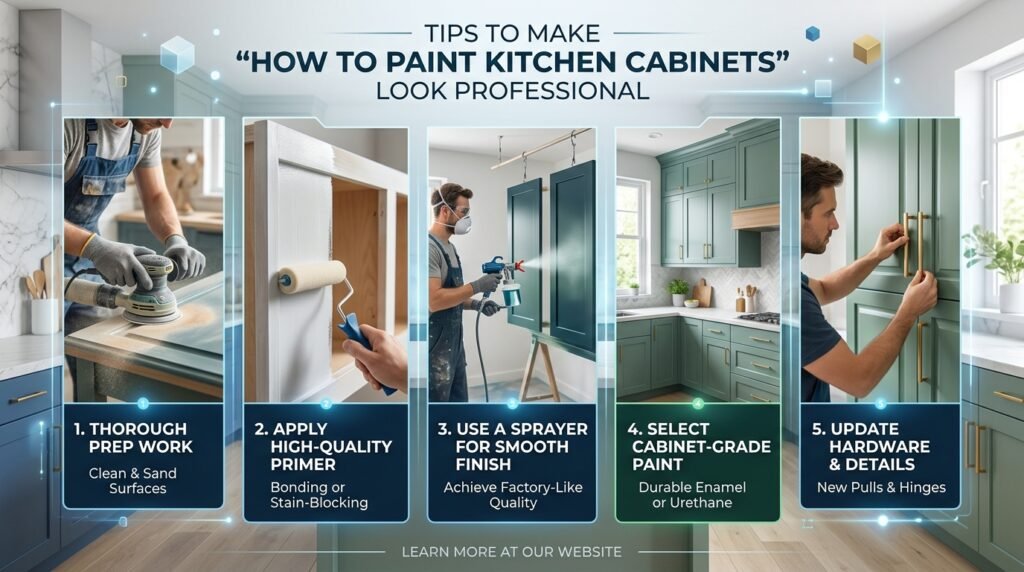
Many homeowners want results that resemble professional work. Fortunately, a few simple strategies can dramatically improve results when learning how to paint kitchen cabinets.
First, always focus on consistency. Smooth strokes and thin layers create a flawless finish. Painters carefully control pressure to maintain a smooth paint finish.
Second, patience matters. Allowing proper curing time ensures strong cabinet paint durability. Rushing the process often ruins otherwise beautiful work.
Third, inspect your work carefully. Professionals often check surfaces under bright light to guarantee a perfect professional cabinet finish.
Finally, proper care keeps cabinets looking fresh. Regular cleaning and gentle maintenance help with maintaining painted kitchen cabinets long after the painting project ends.
FAQs
How long does cabinet painting usually take?
Most projects take three to five days. Learning how to paint kitchen cabinets properly requires preparation, drying time, and careful painting steps.
Can beginners successfully paint their cabinets?
Yes. Anyone can succeed with how to paint kitchen cabinets when they follow a clear process and focus on preparation.
What type of paint works best for cabinets?
Experts recommend durable enamel paints. Choosing the best paint for kitchen cabinets ensures strong results when practising how to paint kitchen cabinets.
Do cabinet doors need to be removed before painting?
Yes. Removing doors makes how to paint kitchen cabinets easier and improves accuracy during the painting process.
How many coats of paint should cabinets have?
Most cabinets require two coats. Proper technique during how to paint kitchen cabinets ensures strong colour and durability.
Is sanding always necessary before painting?
Yes. Sanding helps paint stick properly. Successful how to paint kitchen cabinets always includes proper surface preparation.
How long will painted cabinets last?
With proper care, results from how to paint kitchen cabinets can last many years without needing another repaint.
Conclusion
A fresh coat of paint can completely transform your kitchen. Learning how to paint kitchen cabinets allows homeowners to upgrade their space without expensive renovations. The process requires patience, preparation, and the right materials.
Once you understand how to paint kitchen cabinets, the project becomes surprisingly manageable. Cleaning surfaces, sanding properly, and applying paint carefully make a huge difference. These simple steps create results that rival professional work. Most importantly, how to paint kitchen cabinets gives your kitchen new life. The transformation from old cabinets to a stylish finish can feel remarkable. With the right approach, anyone can achieve a beautiful kitchen cabinet makeover that looks fresh, modern, and long lasting.
Learn how to deep clean kitchen fast with simple steps that remove grease, sanitize surfaces, and leave your cooking space sparkling again.