
Growing a garden can change more than your outdoor space. It can change the way you think, work, and live. That is why growing a garden matters so much. They are not only about flowers, soil, or fresh food. They are also about care, time, and steady effort. When you understand the value of growing a garden, you start to see how small daily actions shape a better life.
Many people think gardening is only a hobby. In truth, it can teach deep lessons. Growing a garden can help you become calmer, kinder, and more focused. They can also show you the importance of gardening in a fast and noisy world. A garden grows slowly, yet it teaches quickly. That quiet lesson stays with you.
This article explains the value of gardening in simple terms. You will learn the benefits of growing a garden, the life lessons from gardening, and the real meaning behind growing a garden every day.
What Grow a Garden Values Really Mean in Everyday Life
When people ask about the meaning of growing a garden, they usually want a simple answer. At heart, the phrase refers to the personal lessons and habits you gain from caring for plants over time. A garden does not reward rush or neglect. It responds to patience, attention, and gentle effort. That is why growing a garden value is such an important question. The answer includes patience, care, consistency, hope, and respect for living things. These are not abstract ideas. They show up in ordinary life when you keep promises, stay calm during slow progress, and look after what matters. In that sense, growing a garden values reach far beyond the garden gate.
Many people now want simple gardening values explained in a way that feels practical. Think of a tomato plant. You cannot shout at it and make it grow faster. You prepare the soil, water it well, protect it from pests, and give it time. Life works in much the same way. Careers, relationships, health goals, and creative work all need steady care. That is where gardening values, values learned from nature, and nature-inspired values become useful. They teach you to trust small actions. They remind you that visible progress often starts underground. That lesson can steady you when life feels slow or uncertain.
A useful way to understand and apply gardening values in daily life is to compare gardening with routine habits. A person who waters herbs every morning often finds it easier to stick to small life goals, too. That is not magic. It is training. The repeated act builds awareness and responsibility. This is one reason learning through gardening works so well for children and adults. It gives you a real-world practice ground. You see the result of care. You also see the result of neglect. Few lessons are clearer than that.
Why Grow a Garden: Values Matter for Personal Growth
There is a strong reason why growing a garden is important today. Modern life moves fast. Screens flash all day. Messages never stop. Many people feel rushed before breakfast. In that kind of world, a garden offers a different rhythm. It says slow down, pay attention, and do one useful thing at a time. This is where gardening for personal growth becomes powerful. It helps you let go of the idea that everything must happen now. Instead, it teaches you to build something with calm and care. That shift alone can improve the way you handle work, family, and stress.
A growing number of wellbeing experts speak about the emotional benefits of gardening. One common finding is simple. People often feel more settled after spending time with plants. The reason is easy to understand. Gardening gives your hands a task and your mind a pause. You focus on soil, leaves, sunlight, and change. That creates a natural form of rest. It also supports gardening and mindfulness because your attention stays in the present moment. You stop chasing ten thoughts at once. You notice what is right in front of you. In a world that constantly pulls you away, that is a rare gift.
The link between gardening and mental health and daily wellbeing matters too. A small home garden can give structure to the day. It offers a reason to step outside, breathe deeply, and notice something alive. That is why many people talk about gardening for wellbeing and about gardening and self-growth together. The garden becomes a mirror. If you are distracted, you see it. If you are patient, you see that too. Over time, that reflection helps shape a stronger mindset. This is why growing a garden with values for personal growth is not just a pleasant idea. They are practical tools for real life.
A simple table makes this clearer:
| Garden habit | Value learned | Real-life effect |
| Watering plants daily | Consistency | Better routines and follow-through |
| Waiting for seeds to sprout | Patience | Less frustration with slow progress |
| Pruning weak growth | Good judgement | Smarter choices and clearer priorities |
| Replanting after failure | Resilience | Stronger response to setbacks |
| Sharing produce | Generosity | Better community and relationships |
This shows the real-life benefits of gardening. The garden may be small, yet the lesson can be huge.
How Growing a Garden Values Teach Patience and Purpose
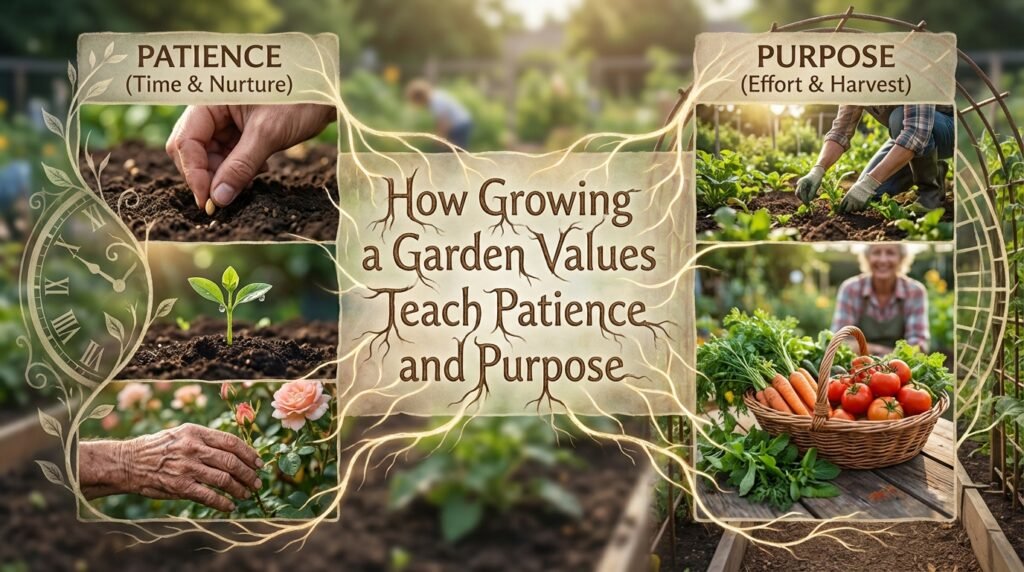
One of the clearest lessons in any garden is patience. Seeds do not rush for anyone. Even fast-growing herbs need time, warmth, water, and the right conditions. Highlighting this can help readers feel hopeful and resilient as they learn to trust slow progress in work, healing, and personal goals.
Purpose grows similarly. When you care for living things, your effort starts to mean something concrete. A neglected plant droops. A cared-for plant revives. The connection between action and outcome becomes hard to ignore. This is one reason the value of nurturing plants matters so much. It teaches you that care is not weak or soft. It is active. It is powerful. When you feed soil, remove weeds, or move a pot into better light, you are making thoughtful choices. Those same choices shape a better life outside the garden. This is how life lessons from growing plants become part of your identity.
There is also a strong link between purpose and routine. Gardens need repeated care. They do not thrive on grand speeches or one dramatic weekend. They thrive on small efforts done often. That is why gardening habits and discipline matter. They turn good intentions into visible results. If you want to know lessons learned from growing a garden, look at the daily rhythm. Water. Watch. Adjust. Protect. Repeat. It sounds simple because it is simple. Yet simple is not the same as easy. The beauty of cultivating a garden, in terms of values and mindset, is that it teaches you to respect ordinary effort. Quiet work. Slow reward. Real meaning.
A well-known saying captures this truth: To plant a garden is to believe in tomorrow. That idea is simple, yet it holds enormous weight. Gardens ask you to invest in a future you cannot fully see today. That is patience with purpose.
Grow a Garden Values That Help Build Strong Character
Character is not built in one grand moment. It grows through small choices repeated over time. That is why growing a garden is a valuable example. They show what strong character looks like in action. A gardener notices when leaves curl, when soil dries, and when growth slows. Then the gardener responds. That kind of attention teaches responsibility. It also teaches humility because nature does not always cooperate. Too much rain, too little light, poor soil, and hungry insects can undo your plans. Yet the lesson is not hopelessness. The lesson is adaptability.
This is where it becomes clear how gardening builds discipline and responsibility. If you forget a plant for a week in summer, it often tells the story at once. The leaves wilt. The stems weaken. Unlike many habits in life, gardening gives quick and honest feedback. That is useful. It shows that actions matter. It also shows that repair is possible. A thirsty plant often recovers with water and shade. That creates a deeper lesson about mistakes. You do not need to be perfect. You do need to care, learn, and act. Strong character often grows from that exact pattern.
The nature-inspired values learned in a garden also have a quiet depth. Seasons teach timing. Compost teaches renewal. Roots teach unseen strength. Blossoms teach hope. Even failed crops teach resilience. That is why life lessons from gardening remain memorable. They are not spoken to you like a lecture. They happen in your hands. If a child grows strawberries in a pot, that child learns care and patience without a long talk. If an adult rebuilds a struggling patch of soil, that adult learns persistence without a motivational slogan. This is the power of growing a garden. They shape character through experience.
A brief case example helps. Consider a beginner who plants lettuce in three containers. The first grows well, the second gets too much water, and the third dries out too often. By the end of the month, that person has learned to observe, balance, and adjust. No classroom could teach those ideas in quite the same way. The garden makes the lesson stick.
Simple Ways to Practice Grow a Garden Values Every Day
You do not need a large garden or expert skills to begin. In fact, one of the best things about growing a garden for beginners is that they can start with a single plant. A pot of basil on a kitchen sill can teach consistency. A small tray of seedlings can teach hope. A balcony planter can teach routine. These small acts matter because they build a rhythm. That rhythm then spreads into daily life. This is one of the overlooked benefits of home gardening. The garden becomes a daily reminder that care works best when it is regular and calm.
Many people wonder how to learn values from gardening at home. The answer starts with a simple observation. Notice when the soil feels dry. Notice how leaves turn toward the light. Notice how one day of neglect may not cause much damage, yet repeated neglect does. These are gentle but powerful lessons. They reveal the logic of healthy habits: you tend to improve what you focus on; what you ignore declines. That makes learning through gardening deeply practical. It is not only about plants. It is about attention. Once you learn to pay attention to a plant, you often become better at paying attention to your mood, your home, and your responsibilities.
A useful way to practise growing a garden value in daily life is to connect one garden habit with one life habit. If you water a plant every morning, use that moment to set a simple intention for the day. If you remove dead leaves, think about one unhelpful habit you need to leave behind. If you repot a plant, reflect on growth and fresh starts. This approach turns the question of how to apply garden values in life into something real, not abstract. It also supports garden lifestyle values by linking the natural world to daily behaviour in a calm and meaningful way.
Parents often ask about growing a garden as a value for kids. Gardening works well for children because the lesson is visible. A child who plants sunflower seeds sees the reward of care. A child who forgets to water a plant sees the cost of neglect. This helps teach patience, responsibility, and curiosity in a natural way. It also creates shared family time that feels useful and warm. In that sense, gardening is both a hobby and a life classroom.
Life Lessons You Can Learn Through Growing a Garden Values
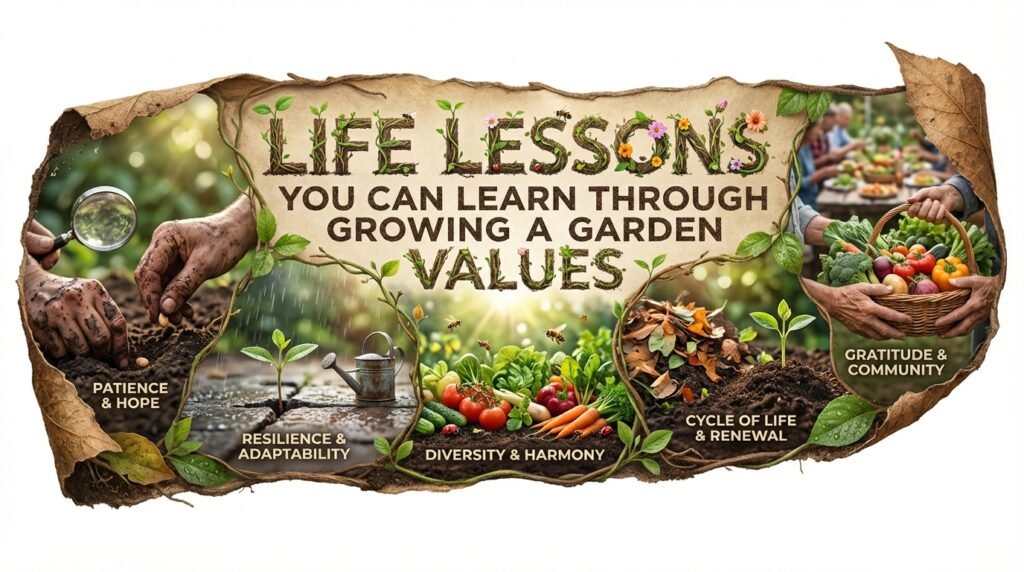
The strongest lessons learned from growing a garden often come from things that do not go to plan. A seed packet may promise easy success, yet weather, pests, or poor soil can change everything. That can feel frustrating at first. Still, the deeper lesson is valuable. Growth depends on conditions as well as effort. You can do many things right and still need to adjust. That teaches flexibility. It also teaches realism. You learn to stop taking every setback as a personal failure. Sometimes the soil needs work. Sometimes the season is wrong. Sometimes the answer is not to quit but to try again with better knowledge.
This is one of the most important moments in which plants teach life lessons. Plants respond honestly to their environment. If they lack light, they stretch weakly. If they get too much water, roots suffer. If they receive steady care, they strengthen over time. People are not plants, of course, yet the comparison is useful. Humans also need the right conditions. Rest matters. Support matters. Space matters. Purpose matters. This is why growing a garden is valuable and why mental health connects so well. The garden reminds you that growth is not only about effort. It is also about environment and care.
Another part of the story involves sustainable living values. Gardening teaches you to respect resources. Water is precious. Healthy soil takes time to build. Seasons shape what grows best. Food does not begin in a shop. It begins with dirt, weather, effort, and time. These lessons encourage gratitude and restraint. They also support the wider importance of garden values in modern life. In a culture of speed and waste, gardening invites stewardship. You waste less. You notice more. You respect the chain between nature and daily life. That is one reason the benefits of growing a garden go far beyond harvest.
A short paragraph-form list makes these lessons easier to see. A garden teaches that slow growth is still growth. It teaches that repeated care beats rushed effort. It teaches that failure often holds instruction. It teaches that living things need the right conditions to thrive. It teaches that hope is practical when paired with action. Those are not small lessons. They are the backbone of a balanced life.
How to Grow a Garden Values Support Joy, Balance, and Fulfillment
One reason growing a garden fosters values and happiness is that gardens offer visible progress. You may start with bare soil or a small pot that looks unimpressive. Then a shoot appears. Then a bud. Then colour, scent, or food. These moments feel small, yet they carry real joy. They are proof that care can produce beauty. In a hard week, that matters more than people often realise. A single healthy plant can lift the mood because it represents life moving forward. That is one of the quiet emotional benefits of gardening.
Balance grows in the same space. Gardens need attention, but they also teach restraint. Too much water can harm a plant just as much as too little. Too much shade slows growth, yet too much harsh sun can scorch leaves. This practically teaches moderation. That is why growing a garden supports a balanced mindset. They train you to notice when something needs more and when it needs less. That lesson applies to work, rest, relationships, and even ambition. A good life, much like a good garden, often depends on balance rather than excess.
The link between gardening, mindfulness, and fulfilment is especially strong. When you touch soil, smell herbs, or notice a new leaf, you step into the present moment. You are not trapped in yesterday or racing into next week. You are simply there. That grounded feeling is one reason people turn to gardening for wellbeing in stressful times. It brings a quiet steadiness. Over time, this can shape a richer life. You feel more connected to home, food, seasons, and yourself. These are the deeper values of the garden lifestyle that make gardening more than a pastime.
A simple comparison helps here. Scrolling through a phone often leaves you stimulated but empty. Spending twenty minutes tending plants often leaves you calm but refreshed. That difference says a lot.
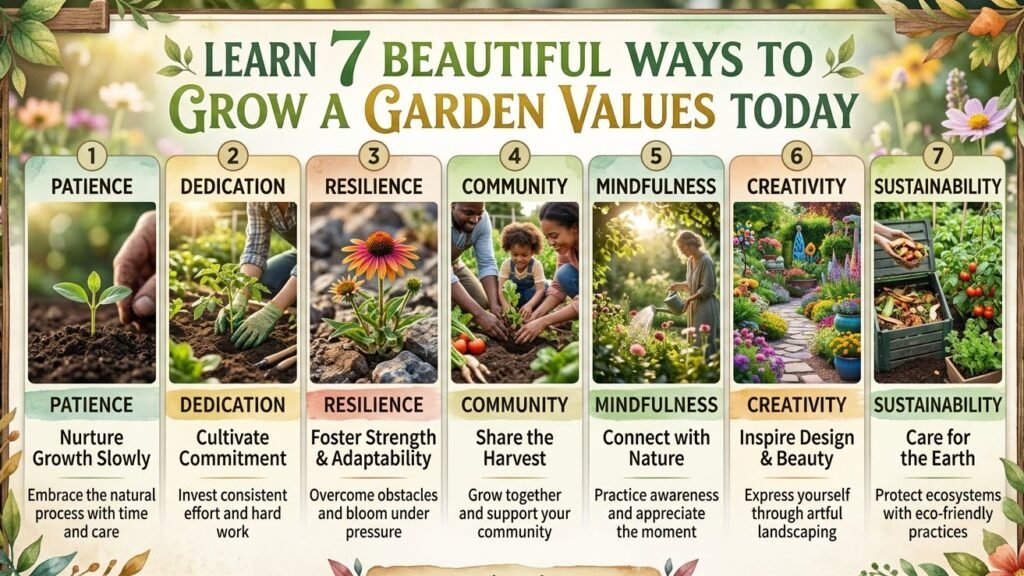
7 Beautiful Ways to Grow a Garden Values Today
The best part about growing a garden is that you can practise it right now. You do not need to wait for a perfect season or a large garden. Begin with patience. Plant something small and allow it to grow in its own time. That simple act teaches you to trust slow progress. Then build consistency. Check your plants every day, even for a minute. That creates a habit of care. Take responsibility by learning what each plant needs, rather than treating every pot the same. This teaches respect for differences, which is useful in life as well.
Next, practise mindfulness while gardening. Feel the soil. Notice the scent of leaves. Watch how sunlight changes through the day. This supports gardening and mindfulness in a real and grounded way. After that, allow mistakes to teach resilience. If a plant fails, ask why. Learn. Replant. Continue. That is one of the richest life lessons you can learn from growing plants. Then create joy by celebrating small wins. A fresh sprout is worth noticing. A healthy leaf is worth appreciating. Joy often grows from attention.
Finally, carry these lessons beyond the garden. Bring patience into your work. Bring care into your relationships. Bring discipline to your goals. Bring gratitude into your daily routine. This is how growing a garden that values personal growth becomes a way of life. The garden is not separate from the rest of living. It is practice for it.
Frequently Asked Questions About Grow a Garden Values
What do these values look like in real life?
In daily life, growing a garden values look like patience, care, routine, and hope in small actions.
Why do these lessons matter so much today?
Growing things matters in a garden; values matter today because they slow you down and help you build calmer, healthier habits.
Can a tiny home setup still teach meaningful lessons?
Yes, even one pot can teach growing garden values, plus care, timing, and the value of nurturing plants.
How do plants help people become more patient?
Plants teach waiting. That is why growing a garden often builds patience through steady care and slow growth.
Are these lessons useful for children as well?
Yes, children learn and develop gardening values through simple tasks that build curiosity, responsibility, and confidence.
Can gardening help emotional wellbeing?
Yes, growing a garden supports calm thinking, routine, and the emotional benefits of gardening every day.
How can a beginner start with these ideas?
Start small. A herb pot can teach growing a garden, values, gardening habits, discipline, and daily focus.
Conclusion
A garden teaches more than planting and watering. It shows how small actions shape a better life. That is why growing a garden matters so much. They help you slow down, stay steady, and care about what you are building. In a rushed world, that lesson feels refreshing and deeply useful.
The beauty of growing a garden lies in its simplicity. You do not need a perfect garden. You only need a place to begin. Through gardening for personal growth, gardening and mental health, and the benefits of growing a garden, you learn lessons that reach far beyond soil. You learn patience, purpose, and balance in a way that feels real.Over time, growing a garden becomes part of your mindset. They shape habits, strengthen character, and support joy. Start small today. Let one plant teach you something worth keeping for life.
Create a private, stylish backyard with expert garden screening tips, design ideas, and maintenance advice for a serene, beautiful outdoor space.
Grow a Garden Values Grow a Garden Values Grow a Garden Values Grow a Garden Values Grow a Garden Values Grow a Garden Values Grow a Garden Values Grow a Garden Values Grow a Garden Values Grow a Garden Values Grow a Garden Values Grow a Garden Values Grow a Garden Values Grow a Garden Values Grow a Garden Values Grow a Garden Values Grow a Garden Values Grow a Garden Values Grow a Garden Values Grow a Garden Values Grow a Garden Values Grow a Garden Values Grow a Garden Values Grow a Garden Values Grow a Garden Values Grow a Garden Values Grow a Garden Values Grow a Garden Values