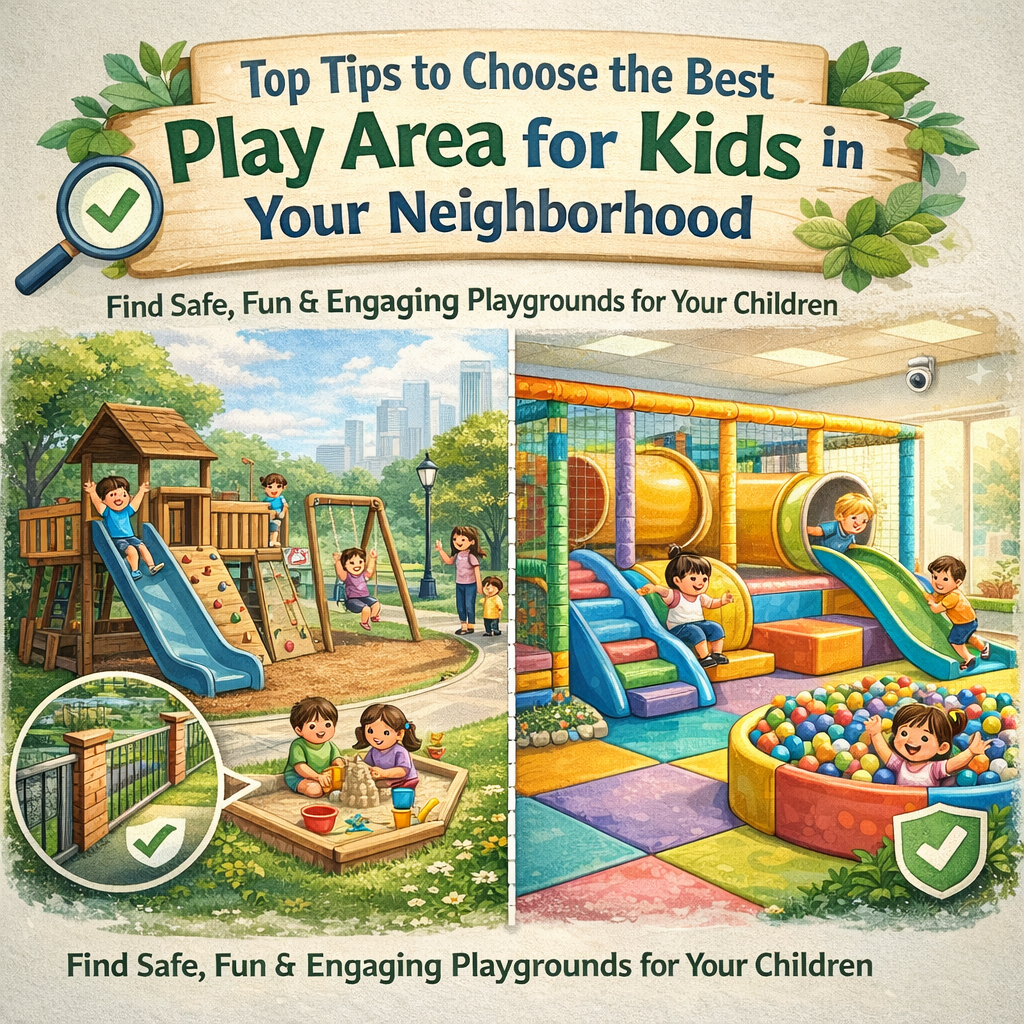
Finding the best play area for kids can feel overwhelming. Every parent wants a place where their child can have fun, be active, and stay safe. But not all kids playgrounds are created equal. Some focus on physical activity, while others offer creative or educational play.
A good play park for kids should be safe, engaging, and suitable for different age groups. Whether you need an indoor play area for rainy days or an outdoor play area in your local park, the options are many. Parents often look for places where kids can play that also encourage social interaction and healthy habits.
Choosing the best play area for kids near your home is important for daily fun and long-term development. From soft play areas to adventure play areas, each option has unique benefits. In this guide, we’ll help you make the right choice for your family.
Features to Look for in the Best Play Area for Kids
When searching for the right play area, certain features make all the difference. Safety is the first priority. Look for safe playground equipment and well-maintained facilities. Many parents prefer a toddler play area for younger children, with age-appropriate toys and structures.
Fun and engagement matter just as much. An activity centre with interactive play zones keeps children entertained for hours, and zones with a jungle gym, soft play areas and space for toddlers encourage both physical activity and creativity. Even a simple fun park can boost confidence and teamwork when children play together.
Variety is another key. Creative play for toddlers, educational play centres and play areas that mix movement with learning give children room to imagine and explore. Check reviews or ask other families about the places they use — word of mouth is the quickest way to find somewhere with real quality and variety.
Top Safety Tips for the Best Play Area for Kids
Safety cannot be overstated when choosing a play park for kids. Always check for play areas with safety features such as padded floors, secure fencing, and age-specific equipment. Supervised play areas or staff-monitored facilities are highly recommended, especially in kids recreation centers or indoor play areas.
Parents should inspect outdoor play areas for hazards like broken swings or sharp edges. Healthy outdoor play options include shaded areas and equipment made of non-toxic materials. Ensuring that children use safe playground equipment helps prevent injuries and accidents.
A practical tip is to visit the site during peak hours. This helps you observe how staff manage areas for kids’ physical activity and whether child-friendly play spaces are clean and safe. Remember, even the best play area is only as safe as its maintenance and supervision.
Creative Activities in the Best Play Area for Kids
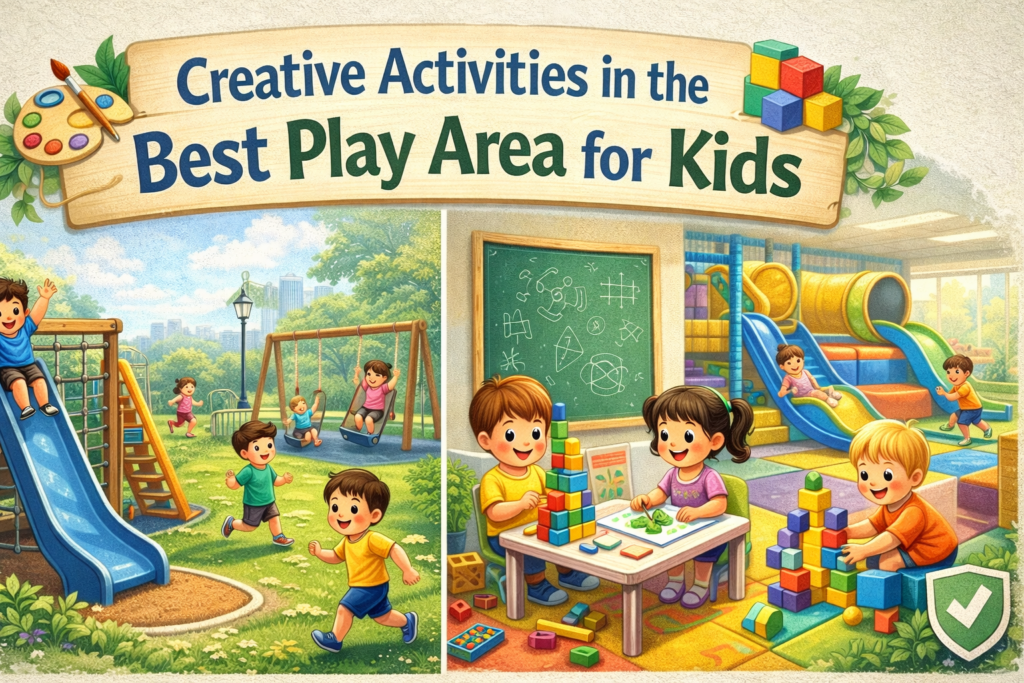
A good play area isn’t just safe; it’s also packed with exciting activities. Indoor fun activities like soft climbing, slides, and interactive games stimulate children’s minds and bodies. Outdoor games, such as climbing frames, swings, and running tracks, build strength and coordination.
Playroom ideas can inspire parents to recreate elements of the play area at home. A spare room works well as a dedicated playroom — soft flooring, low shelves and a few open-ended toys are enough to start. A girl’s bedroom can carry the same idea on a smaller scale, with a reading corner and an art table. Many play areas combine physical activity with learning: educational centres often include puzzles, building blocks or art corners, and creative setups encourage imaginative storytelling and group play.
Social interaction is a big bonus. In a playground, children learn to share, communicate and solve problems together. Places for active play help them develop confidence and teamwork skills, and a visit that is both entertaining and developmental is the one they ask to repeat.
Choosing the Right Location for the Best Play Area for Kids
Location plays a huge role in picking the right play area. Parents often look for a park within easy reach, with convenient parking and nearby amenities that make visits smoother and more enjoyable. Start with the places closest to home and compare them on safety, cleanliness and the variety of activities on offer.
Consider the environment. Outdoor play areas should be safe and clean, with shaded spots for sunny days — a patio set up for play makes outdoor days easier, with shade, seating and a clear view from the house. Indoor play areas offer a reliable alternative during rainy weather or cold months, and a guest bedroom can double as a rainy-day playroom with a few cushions and a toy basket. Families often look for recreational spaces that combine playgrounds, picnic areas and seating for adults.
The neighbourhood also matters. Facilities with parks suitable for kids, supervised play areas, and well-maintained playgrounds with slides and swings provide peace of mind. Parents should visit multiple locations to compare features, safety, and the variety of activities offered.
Benefits of Spending Time in the Best Play Area for Kids
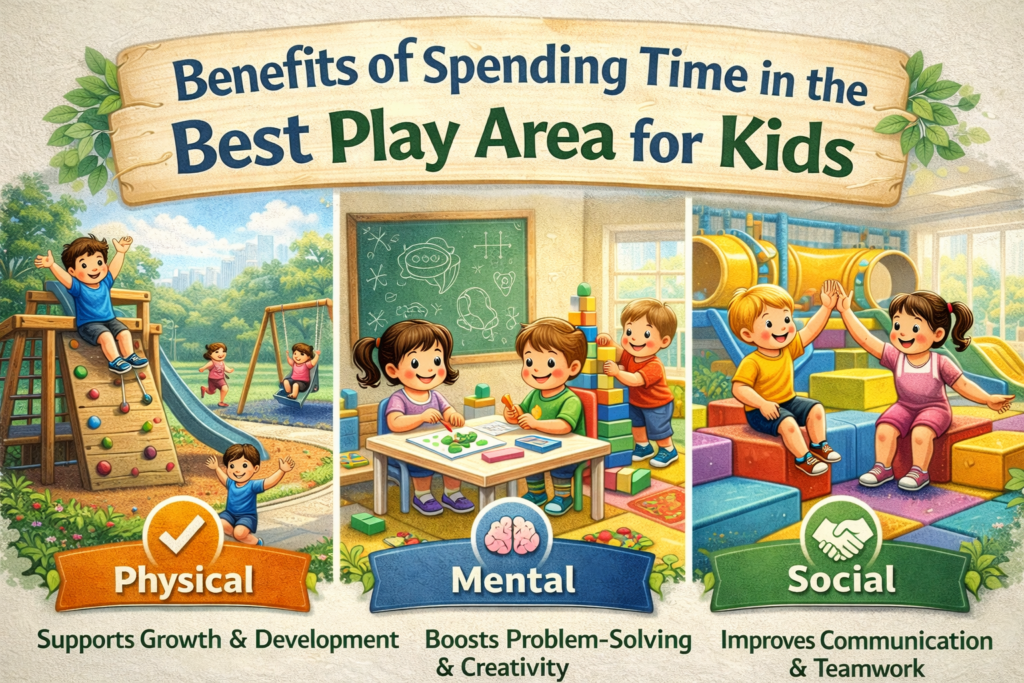
Spending time in a good play area offers countless benefits. Physically, children improve strength, coordination and endurance through climbing, running and swinging. Mentally, interactive play zones and creative play for toddlers enhance problem-solving, imagination and concentration.
Social skills are another advantage. Children’s play areas where they interact allow them to communicate, share, and cooperate with peers. Structured and supervised play areas teach discipline and teamwork. Even soft play areas can boost confidence as children master new skills.
Overall, frequent visits to a good play area support healthy growth and development. Families can enjoy quality bonding time together, while kids experience joy, learning and exercise.
Frequently asked questions
What should I look for when choosing a place for my child to play?
Look for safe equipment first: padded floors, secure fencing and age-appropriate activities, with separate areas for toddlers and older children. The space should be clean, well maintained and staffed, with room for both energetic play and quieter creative corners.
How can I know if a play space is safe for toddlers?
Check for padded floors, secure fencing and supervised zones designed specifically for young children. Equipment should be low to the ground with no sharp edges, and there should be a separate toddler area away from older children’s climbing frames.
Are indoor or outdoor play spaces better for kids?
Both have their place. Indoor spaces are ideal in bad weather and for younger children, while outdoor areas give children fresh air, sunshine and room to run. Most families use both, depending on the season and the child’s age.
What types of activities should I expect at a kids playground?
Expect climbing frames and slides, soft play areas, interactive games and creative corners with building blocks, puzzles or art supplies. A good playground mixes physical challenges with imaginative play, so children can switch between the two.
How often should children visit a play park?
A couple of visits a week is plenty for most families — enough to build social skills, creativity and physical strength without making it a chore. Let the child lead: if they ask to go back, the place is working.
Can play areas support learning and education too?
Yes. Many play areas include educational games, puzzles and creative corners that teach through play — counting games, building challenges and role-play areas all build skills without feeling like lessons.
How can I find the right location near me?
Start close to home and visit a few places in person before committing. Check accessibility, parking, cleanliness and whether staff are visible and friendly, and watch how children are supervised during busy times.
Conclusion
Choosing the best play area for kids is more than just picking a fun location. It involves evaluating safety, activities, and accessibility. A well-chosen kids playground can boost creativity, social skills, and physical fitness.
Parents should prioritise safety and look for facilities with play areas that have safety features. Whether it’s an indoor play area, an outdoor play area or a kids activity centre, the right environment makes a big difference. Investing time to find the right play area ensures children have regular access to places where kids can play safely and enjoyably. Regular visits nurture growth, happiness and memorable experiences for the whole family.
Affordable front house makeover tips to transform your home exterior, boost curb appeal, and create a stunning, welcoming entrance.