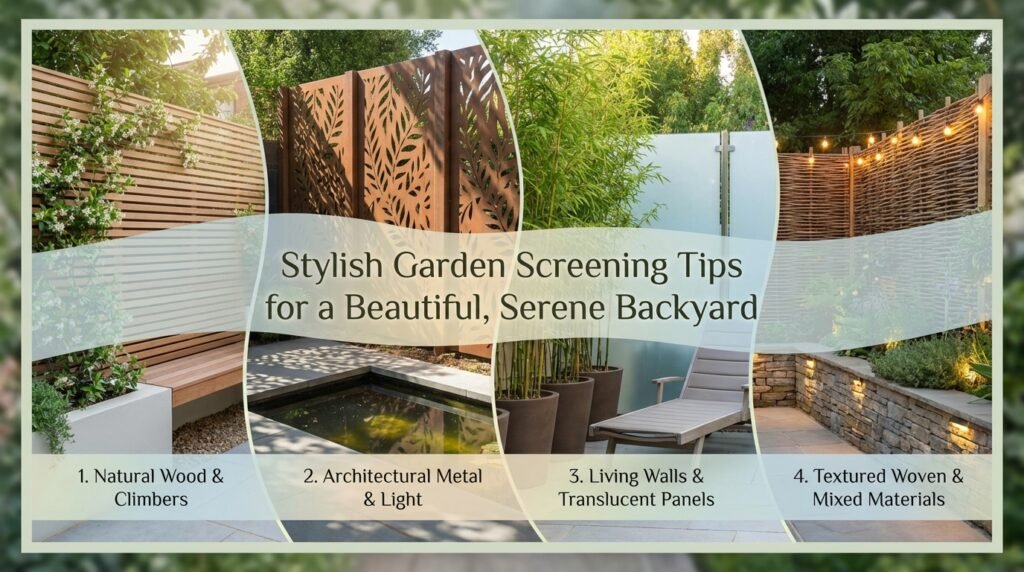
A backyard can be your personal retreat, but sometimes it feels exposed to neighbours or passersby. Screening offers a stylish solution — it can turn an ordinary garden into a private, serene space where you feel comfortable and relaxed.
Choosing the right screen is more than just blocking views. It adds beauty, enhances your outdoor decor, and gives you privacy that lasts. With the right materials, you can create a space that feels cosy and elegant.
Whether you prefer a trellis, a slatted panel, or a living wall of plants, there are options for every yard. From small urban gardens to large suburban backyards, screening improves both looks and privacy. This guide covers ideas for small spaces, materials, design tips, and maintenance advice to help you create a serene and stylish outdoor haven.
What Is Garden Screening and Why It’s Essential for Your Yard
A screen is any method of adding visual or physical barriers to your outdoor space. It can be wooden slats, bamboo, a hedge, or metal panels — and for a solid boundary, a garden fence is the sturdiest option of all. The primary goal is privacy, but the right screen also enhances the overall look of your garden.
A well-chosen screen transforms your backyard into a relaxing retreat. It lets you block unwanted views without compromising style, and people often underestimate how much privacy matters until they experience a calm, secluded space. Homes with good screening tend to spend more time outdoors and enjoy their space more.
Besides privacy, screening can protect your garden from wind and reduce noise. Using living barriers or solid walls, you can create sheltered microclimates that help plants flourish. The right design also adds layers, texture, and a sense of enclosure to your yard.
Top Materials for Effective and Stylish Garden Screening
The material you choose defines both style and durability. Wooden screens are timeless, blending naturally with plants while providing solid coverage, and they work well for patios and traditional gardens. Metal panels offer a sleek, modern look and last decades with minimal maintenance.
For eco-conscious options, bamboo screens are lightweight, renewable, and visually striking. Trellis for garden is versatile, supporting climbing plants to add greenery and softness. Combining decorative garden panels with plants creates privacy while keeping the space visually interesting.
Other materials include partitions and walls, which can be permanent or movable. For small spaces, lighter solutions like freestanding screens work best. Each material has pros and cons: metal panels resist weather but can feel cold, while wooden screens need occasional sealing to last longer.
How to Choose the Right Garden Screening for Your Space
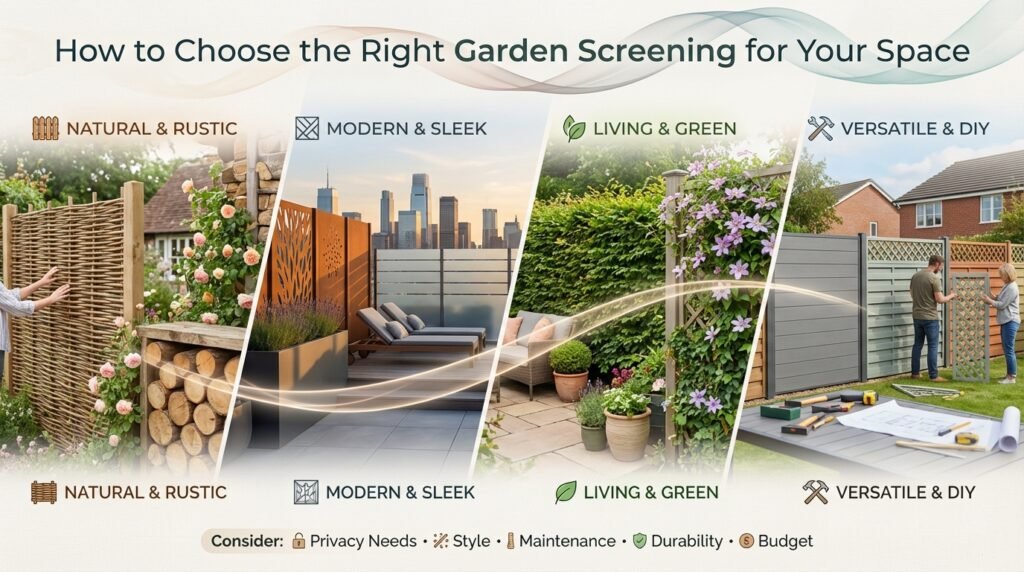
Selecting screening depends on your space, style, and goals. Measure your backyard carefully and decide how much privacy you need — solutions range from full-height screens to low partitions that block only direct views.
Style is also crucial. A modern backyard suits metal panels, while traditional gardens benefit from wooden screens or hedges. Affordable ways to screen your garden include using plants, trellises, or modular panels — the same budget thinking in our smart budget small garden ideas guide applies here. Consider combining materials for a layered effect.
For small gardens, vertical screens, narrow partitions, or decorative panels can maximise privacy without feeling cramped. For larger yards, walls or living barriers create secluded zones for relaxation. The same approach works at the front of the house too — our front garden ideas guide shows how to frame the entrance with planting and panels. Always plan for access, light, and airflow to maintain a healthy environment.
Creative Garden Screening Ideas to Enhance Privacy and Beauty
You can get creative with screening to make your backyard visually appealing. Combining plants with screens is popular — climbing vines on a trellis or panels softens the look while keeping views blocked.
In small urban gardens, vertical screens can create pockets of privacy without overwhelming the space. For larger gardens, wooden or metal screens can define zones, such as a dining area, a lounge space, or a fire pit corner — our fire pit ideas for small backyards show how to place one safely. Mixing textures and heights adds interest.
Modern solutions use recycled materials and sustainable wood. Adding screening that blends with the landscape ensures the design feels natural rather than imposed, and even planters with decorative panels can make a patio more inviting while maintaining privacy.
Maintenance Tips to Keep Your Garden Screening Looking Great
Maintaining your screening keeps it functional and attractive. Wooden screens require regular sealing or staining to prevent rot, and a good routine includes trimming plants, cleaning surfaces, and checking structural stability.
For bamboo and hedges, pruning encourages healthy growth and ensures privacy. Durable materials combined with proper care last longest, and seasonal inspections prevent damage from wind, rain, and snow.
Even small measures, like watering climbing plants on trellises or tightening screws on panels, make a significant difference. Well-maintained screening enhances enjoyment, whether you’re hosting guests or relaxing alone.
DIY vs Professional Garden Screening: Pros and Cons Explained
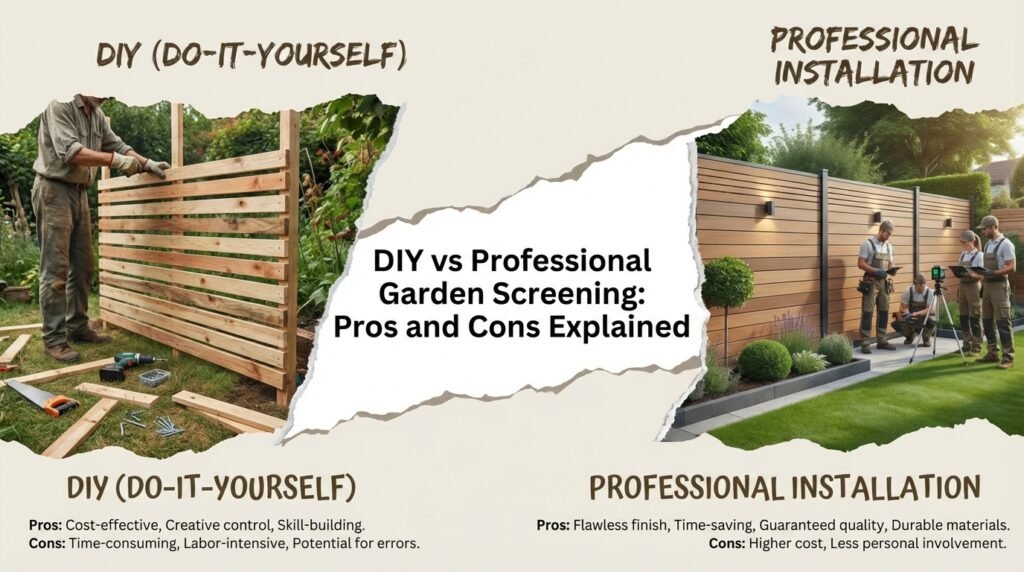
Deciding between DIY and professional installation depends on skill, budget, and time. DIY projects are affordable and flexible — you can customise the result with a trellis, movable partitions, or stacked panels.
Professional installation ensures durability and precision. Experts can assess your space and recommend solutions tailored to your yard. While costlier, professional work often lasts longer and requires less ongoing maintenance.
Combining approaches works too. DIY elements can complement professionally installed walls or panels, giving you both style and efficiency. Whether you build it yourself or hire professionals, the goal is a private backyard that is both functional and beautiful.
FAQs
What is the main purpose of garden screening?
Privacy comes first, with beauty a close second. A screen blocks sightlines from neighbours and passersby while adding structure and style to the garden. The best designs do both at once — they make the space feel more private and more finished.
Can I use plants as part of garden screening?
Yes — plants are one of the best screening materials. Climbing vines on a trellis, a hedge of evergreen shrubs, or tall grasses in planters all create natural barriers that soften the look. They take a season or two to fill in, so pair them with a panel or fence while they grow.
Which materials last longest for outdoor screens?
Metal panels and treated wooden screens last longest — a powder-coated metal panel can last 20 years or more with almost no upkeep. Treated hardwood lasts well too if it is sealed every couple of years. Bamboo looks great but needs replacing sooner, typically after 5 to 8 years outdoors.
Are DIY garden screening projects suitable for small yards?
Yes, small yards are where DIY screening works best. A single trellis panel, a narrow planter with tall grasses, or a freestanding screen can create privacy in an afternoon without any building work. Keep the design light and movable so the space still feels open.
How often should garden screens be maintained?
Inspect screens twice a year, in spring and autumn. Clean off dirt and algae, tighten any loose screws, and re-seal or re-stain wooden panels every two to three years. Prune climbing plants back in late winter so they do not pull the panels down.
Can garden screening improve backyard value?
Yes. A private, well-designed backyard is a strong selling point — buyers notice it immediately, and estate agents often list privacy as a top feature. Screening also makes the garden more usable, which adds to how the home feels day to day.
What are eco-friendly garden screening options?
Bamboo screens and panels made from recycled wood are the most sustainable choices. Living screens — hedges, climbing plants, and tall grasses — are even better, since they absorb carbon and support wildlife. Look for FSC-certified timber if you buy wooden panels.
Conclusion
Creating a serene backyard starts with thoughtful screening. It not only adds privacy but also elevates the overall design of your space, and the options — from slatted panels to living walls — are plentiful and versatile.
Choosing the right materials and design, whether through DIY projects or professional solutions, ensures your backyard is both beautiful and functional. Hedges or metal panels help you relax confidently outdoors, and with proper maintenance your screening will last for years. By combining plants, screens, and creative design, you can build a retreat that suits your lifestyle.
Best garden accessories to add style, comfort, and charm to your outdoor space with smart ideas that make every corner feel better.