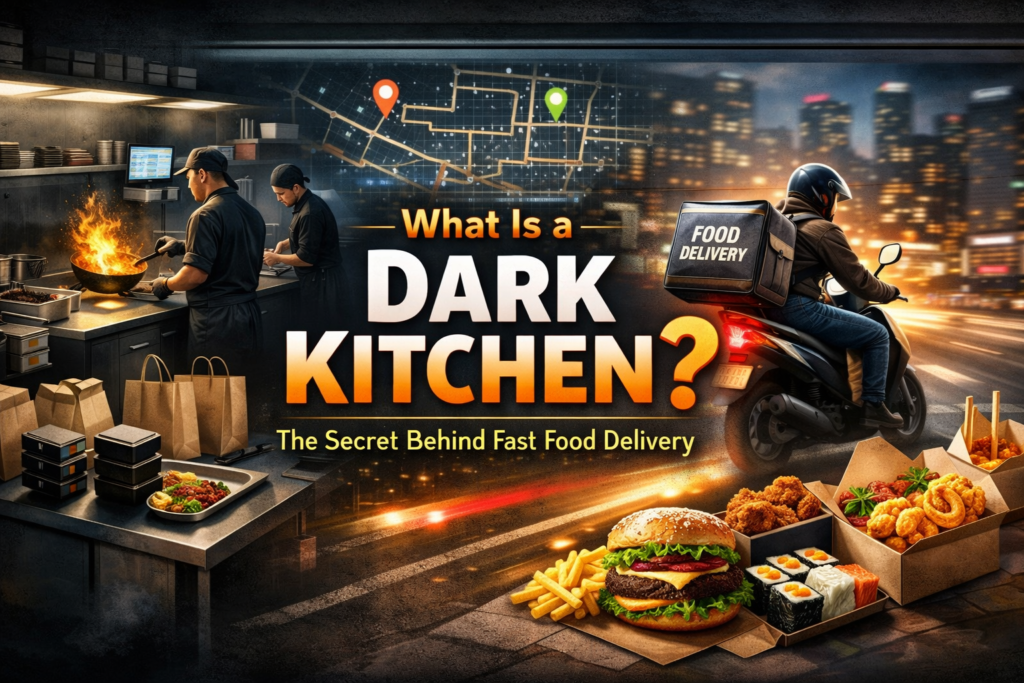
Food delivery has changed how people order meals today. Many customers enjoy restaurant food without visiting a restaurant. This change raises an important question: what is a dark kitchen and why is it becoming so popular across the UK and US?
In simple terms, what is a dark kitchen describes a kitchen that prepares food only for delivery. There is no dining area and no walk-in customers. Chefs cook meals in an online food delivery kitchen, then drivers deliver them to homes. This model helps restaurants grow faster while spending less money.
Understanding what is a dark kitchen explains how modern food businesses work. Many brands now run a cloud kitchen business or delivery-only kitchen to reach more customers. As food delivery apps grow, learning what is a dark kitchen reveals the hidden system behind fast food delivery today.
What Is a Dark Kitchen and How Does It Work?
To understand what is a dark kitchen, start with the dark kitchen meaning. A dark kitchen is a kitchen space used only for preparing food for delivery. Customers never enter the building. Instead, the kitchen focuses on speed, efficiency, and high-volume cooking.
This dark kitchen concept is also known by other names. Many people use the term ghost kitchen meaning or virtual kitchen concept to describe the same idea. In practice, it operates as a specialised online food delivery kitchen where chefs prepare meals for delivery apps.
The process is simple but efficient. A customer places an order through a delivery platform. The order appears on the kitchen system. Staff prepare the meal quickly inside the commercial delivery kitchen. Drivers collect the order and deliver it to the customer’s door.
This structure forms the core dark kitchen operation. Unlike traditional restaurants, the kitchen focuses entirely on dark kitchen food production rather than dining service. Many facilities also work as a restaurant delivery hub, where multiple brands prepare meals from one location.
Modern technology plays a major role. Many businesses rely on dark kitchen technology and apps to manage orders, track deliveries, and coordinate kitchen staff. These tools connect restaurants with dark kitchen food delivery services, creating a smooth digital workflow.
What Is a Dark Kitchen and Why Are Restaurants Using It?
Restaurants today face rising costs. Rent, staff wages, and dining space make traditional restaurants expensive to run. Because of this, many businesses now explore what is a dark kitchen and how it can reduce expenses.
The biggest reason behind this shift is efficiency. A dark kitchen restaurant does not require a dining area, furniture, or front-of-house staff. Instead, the entire operation focuses on preparing food for delivery orders.
Understanding why restaurants use dark kitchens reveals the advantages of the model. Businesses can operate from smaller spaces and still serve a large delivery area. Many companies use a cloud kitchen business strategy to expand quickly in multiple cities.
The benefits of dark kitchens are clear. Restaurants reduce rent costs. They hire fewer staff members. They can also launch new food brands without opening physical restaurants. This flexibility allows owners to test menus and adapt quickly.
Many entrepreneurs see the dark kitchen startup idea as an exciting opportunity. A small team can operate a delivery-only kitchen and sell meals through several delivery platforms. This approach creates new income streams with lower financial risk.
What Is a Dark Kitchen Business Model in Food Delivery?
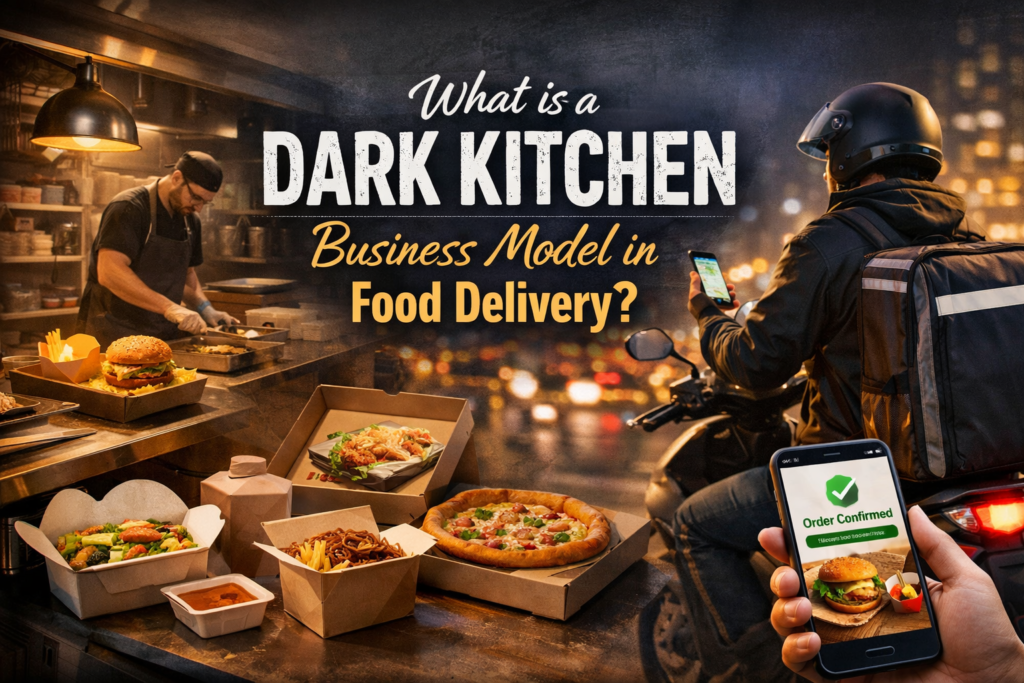
The dark kitchen business model focuses on delivery instead of dining. A single kitchen space prepares food for online orders only. Customers browse menus through apps and place orders from home.
This system forms the dark kitchen food delivery model. Restaurants connect their kitchen systems with dark kitchen delivery platforms that manage orders, payments, and drivers. The kitchen prepares food quickly and sends it out for delivery.
Many facilities operate as a shared kitchen for delivery brands. One large kitchen may support several different food brands. For example, a single location might produce burgers, pizzas, and sushi under different brand names.
Running this system requires strong organisation. Businesses use dark kitchen management software to track orders, control inventory, and schedule staff. This technology ensures efficient dark kitchen food production and smooth kitchen workflow.
Below is a simple table explaining the typical food delivery kitchen setup.
| Element | Role in Dark Kitchen |
| Kitchen equipment | Used for cooking multiple menu items |
| Delivery platforms | Handle online orders and payments |
| Packaging stations | Prepare meals for delivery drivers |
| Kitchen management systems | Coordinate orders and workflow |
Investment costs vary depending on location. The dark kitchen setup cost is usually lower than opening a traditional restaurant. However, owners still need quality equipment and a strong dark kitchen business strategy to succeed.
What Is a Dark Kitchen and How Is It Different from Restaurants?
A major question people ask is about the dark kitchen vs traditional restaurant comparison. While both prepare food, the way they operate is very different.
Traditional restaurants serve customers inside a physical dining space. Staff greet guests, take orders, and provide table service. In contrast, a dark kitchen restaurant focuses entirely on delivery orders.
Another difference involves customer interaction. Traditional restaurants build relationships through atmosphere and service. A delivery-only kitchen builds its reputation through speed, quality, and online reviews.
Many people also ask about the difference between ghost kitchen and dark kitchen. In most cases, the terms mean the same thing. Both describe kitchens that operate without a dining area. However, some businesses use ghost kitchens for shared cooking spaces with multiple brands.
There are both strengths and challenges in this model. The dark kitchen business advantages include lower costs and faster expansion. At the same time, dark kitchen disadvantages include dependence on delivery platforms and strong competition.
What Is a Dark Kitchen and Why Is It Growing So Fast?
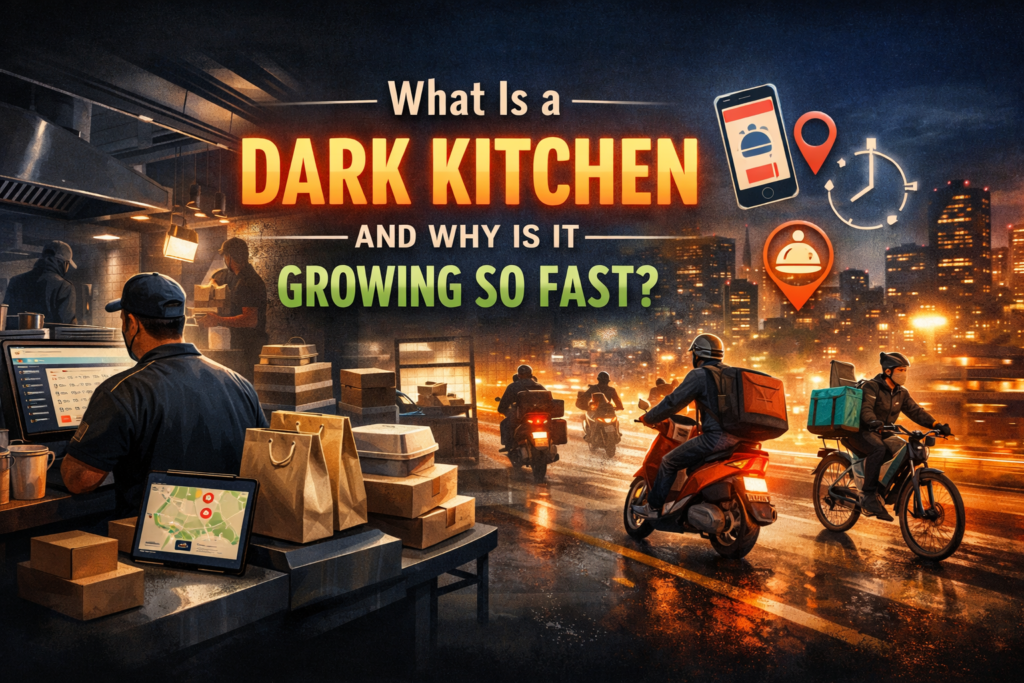
The rapid expansion of delivery services explains why what is a dark kitchen has become such a common question. People today value convenience. Ordering food through a mobile app often feels easier than visiting a restaurant.
This change has driven major dark kitchen market growth. Many cities now contain clusters of delivery kitchens that operate as food production centres. These locations act as restaurant delivery hubs that serve large urban populations.
Experts describe this shift as a powerful dark kitchen industry trend. Food delivery platforms continue to grow rapidly. As a result, restaurants must adapt to changing customer behaviour.
Technology plays an important role in this growth. Dark kitchen technology and apps allow kitchens to manage large volumes of orders quickly. This efficiency helps businesses serve customers faster than traditional restaurants.
Looking ahead, many analysts predict a strong future of dark kitchens. Automation, smart kitchens, and advanced delivery systems will likely make this model even more efficient.
What Is a Dark Kitchen and How Can It Benefit Food Businesses?
For entrepreneurs, learning what is a dark kitchen opens the door to new opportunities. The model allows businesses to enter the food market without large investments.
A dark kitchen for startups provides a practical entry point. Small teams can launch brands through delivery platforms and reach thousands of customers.
Understanding how to start a dark kitchen requires planning. Owners must choose the right location, develop a strong menu, and partner with reliable delivery services.
Restaurants can also benefit. Many companies use a dark kitchen for restaurants to expand into new neighbourhoods without building new dining spaces. This strategy allows businesses to reach more customers while controlling costs.
Large companies also create multiple dark kitchen restaurant brands within the same kitchen. Each brand offers a different cuisine while sharing the same equipment and staff.
FAQs
How do delivery kitchens operate without customers visiting?
Restaurants that understand what is a dark kitchen prepare meals inside delivery kitchens and send them directly to customers through food delivery platforms.
Why are food delivery kitchens becoming popular?
Businesses studying what is a dark kitchen see lower costs and faster growth through delivery-focused kitchens and digital ordering systems.
Can small businesses run a delivery kitchen?
Yes. Entrepreneurs who understand what is a dark kitchen often launch small delivery kitchens with limited staff and simple kitchen setups.
Are delivery kitchens profitable for restaurants?
Many owners say profits improve after learning what is a dark kitchen because operating costs stay lower than traditional restaurants.
Do famous brands use delivery kitchens?
Many global companies already use this model. Understanding what is a dark kitchen shows how major brands expand quickly.
Is starting a delivery kitchen expensive?
Compared with traditional restaurants, what is a dark kitchen usually involves lower startup costs and fewer operational expenses.
Will delivery kitchens replace restaurants?
Experts studying what is a dark kitchen believe both models will continue working together in the modern food industry.
Conclusion
Understanding what is a dark kitchen helps explain a major shift in the food industry. Restaurants today operate in a digital world where delivery apps dominate customer behaviour. Instead of large dining spaces, many businesses now rely on efficient delivery kitchens.
Learning what is a dark kitchen reveals why this model is growing rapidly. Lower operating costs, faster expansion, and flexible branding make it attractive for modern food businesses. Entrepreneurs and restaurant owners can reach more customers without opening traditional locations.
Looking ahead, what is a dark kitchen will remain an important question as the food industry evolves. Technology, delivery platforms, and new business strategies will continue shaping how meals reach customers. As demand for convenience grows, dark kitchens will likely play an even bigger role in the future of food delivery.
Learn how to paint kitchen cabinets step by step. Simple methods, pro tips, and colour ideas to make old cabinets look brand new.